Where filters sit in an airless system
An airless sprayer filters the material more than once on its way to the surface, and each stage catches something different. Knowing which stage is causing a problem is usually the fastest way to fix it:
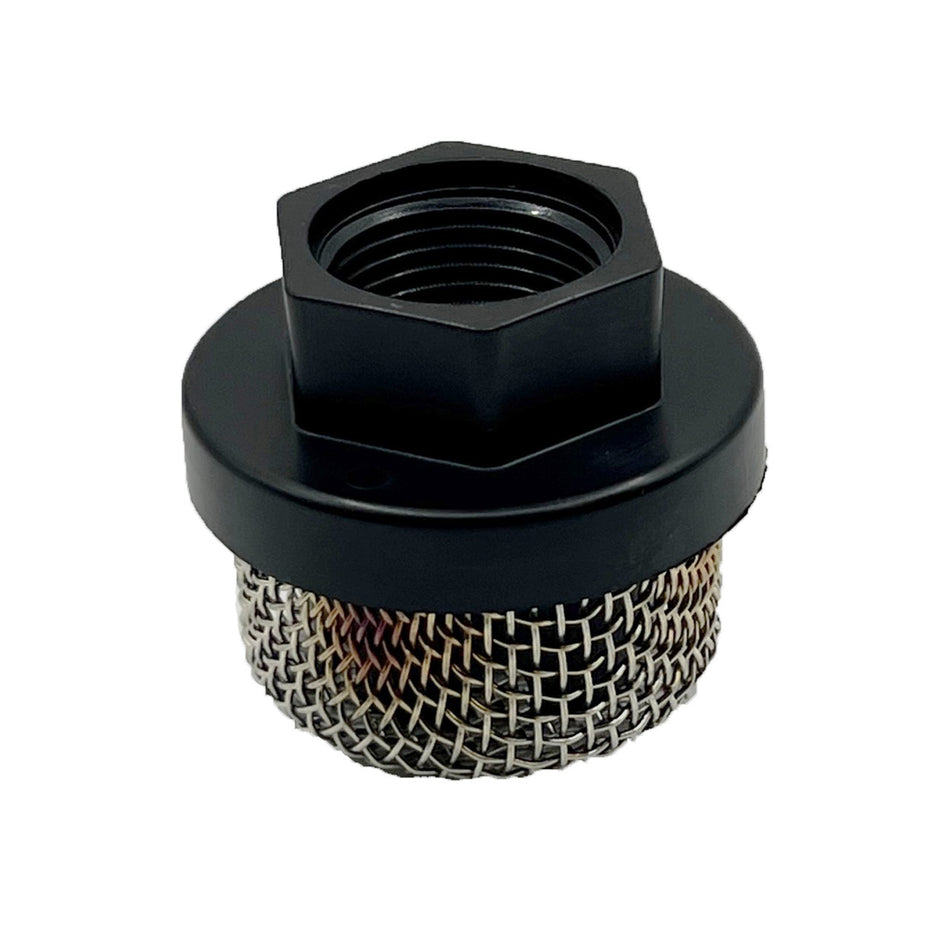
- Inlet strainer or screen — on the suction tube, in the bucket. Catches skins, dried paint, and debris before anything reaches the pump. Coarsest filtration in the system.
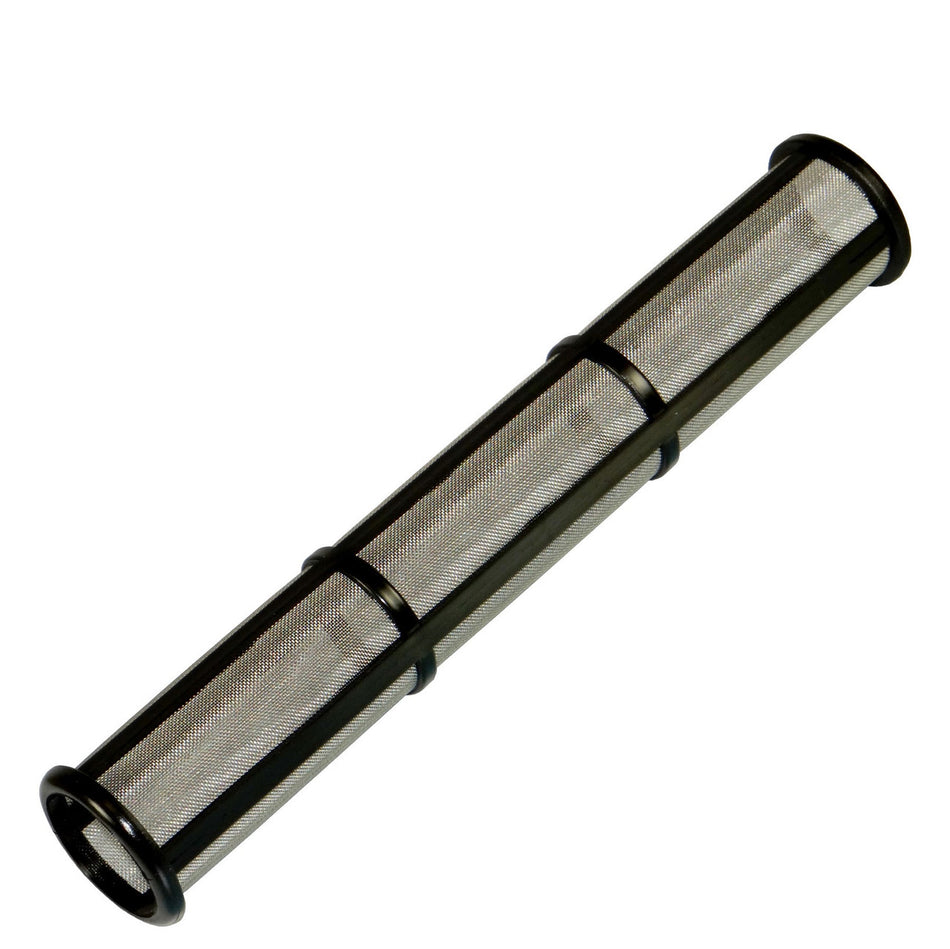
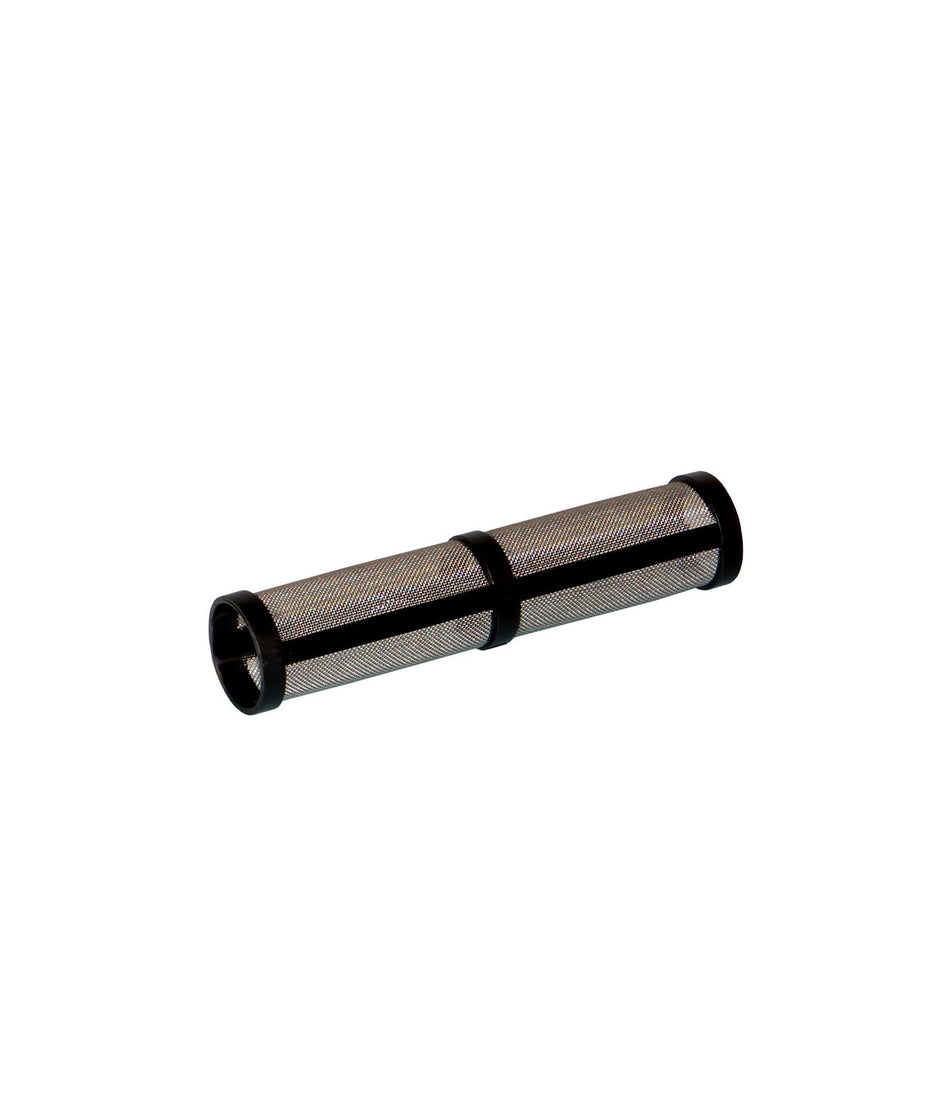
- Pump or outlet manifold filter — downstream of the pump. Protects the hose and gun from anything the inlet let through, and is the filter most often neglected.
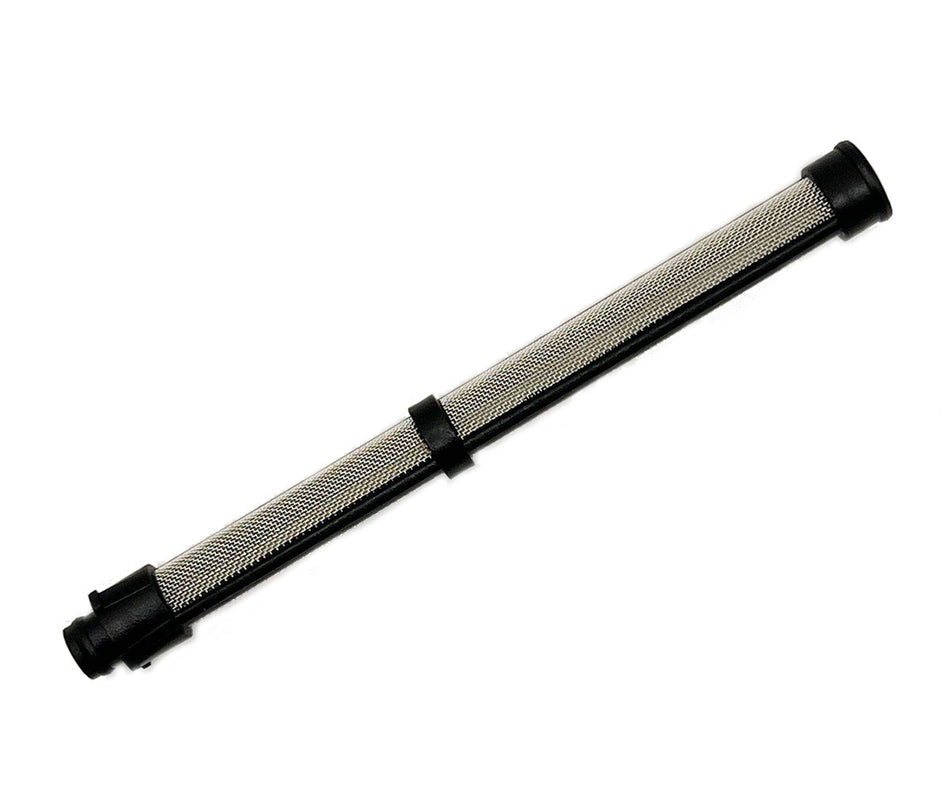
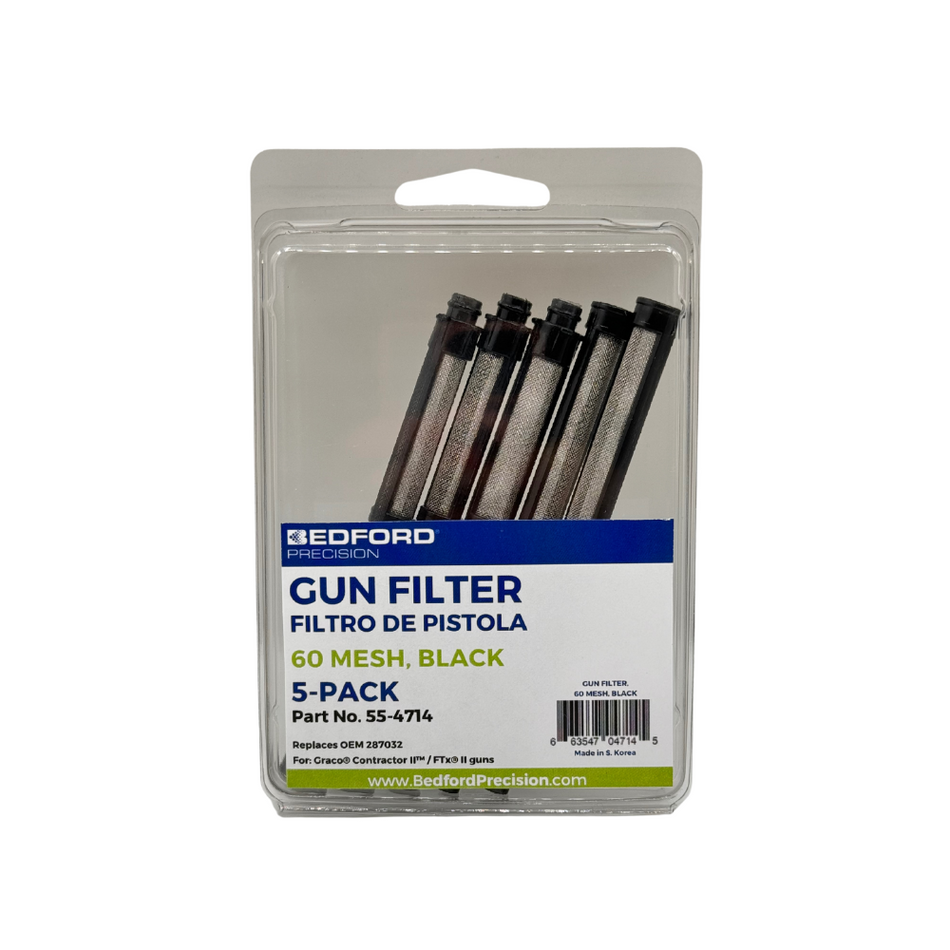
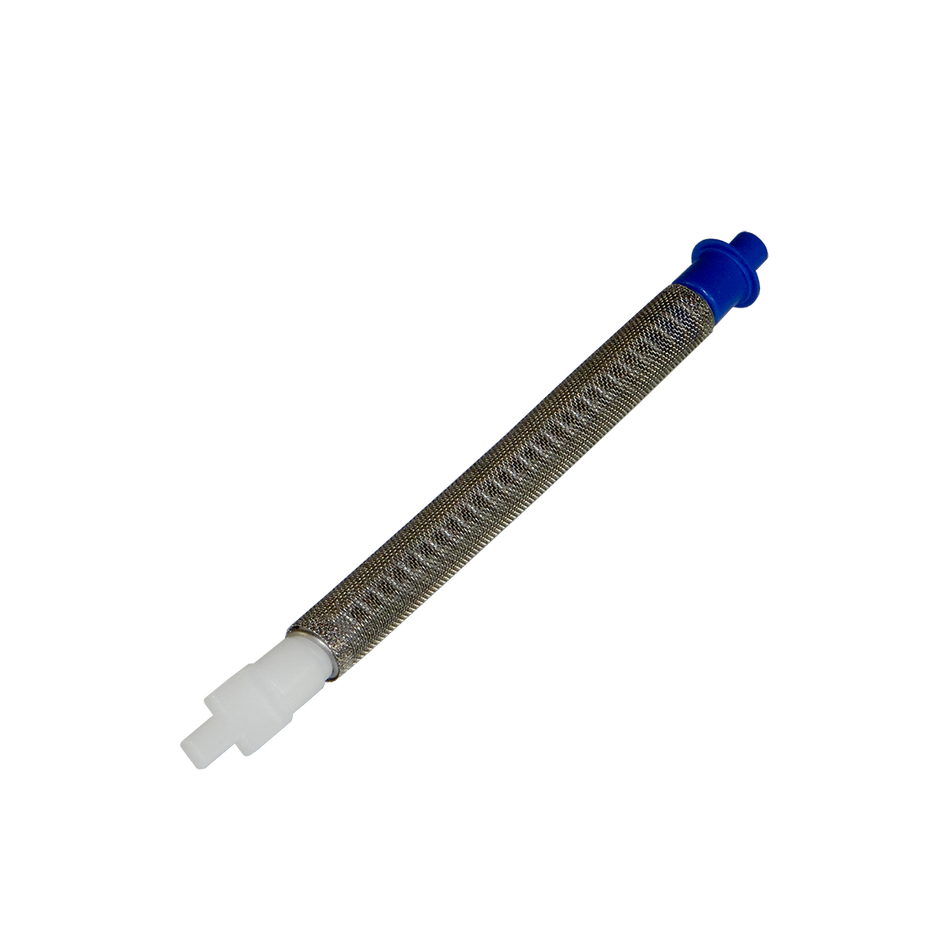
- Gun filter — in the handle. The last defence before the tip, and the one that decides whether you spend the day clearing tip clogs.
- Tip filter — used on some gun and tip combinations for the finest work.
If the tip keeps plugging, the gun filter is the first thing to check. If the pump is starving or losing prime, start at the inlet.
What mesh means
Mesh is the number of openings per linear inch of screen, so a higher number is a finer filter. A 200 mesh screen has far smaller openings than a 30 mesh screen and will hold back much finer particles.
Finer is not automatically better. A filter that is too fine for the material will clog constantly and starve the gun, which shows up as a weak pattern and a pump that runs more than it should. Too coarse, and debris reaches the tip and plugs it. Match the mesh to the material:
| Mesh | Grade | Typical materials |
|---|
| 30 | Coarse | Heavy latex, block filler, and high-build coatings that would blind a finer screen. |
| 50–60 | Coarse to medium | Latex paints and primers — the general production range for wall work. |
| 100 | Fine | Enamels and stains, where a coarser screen would let through particles a small tip cannot pass. |
| 150–200 | Fine to extra fine | Lacquers and fine finishing materials sprayed through the smallest tips. |
Filters are often colour-coded, but the colours are not consistent between manufacturers — go by the mesh number printed on the part and on each product page, not by colour alone.
Matching the filter to your tip
Filter mesh and tip size work together. A small orifice plugs on particles a large one would pass, so the finer the tip, the finer the filter it needs — and the heavier the material, the coarser the filter has to be to keep flowing.
These are starting points. If a filter blinds repeatedly on a material, step one grade coarser; if the tip keeps plugging, step finer.
Filters and strainers, by type
| Part | What it does | When to replace |
|---|
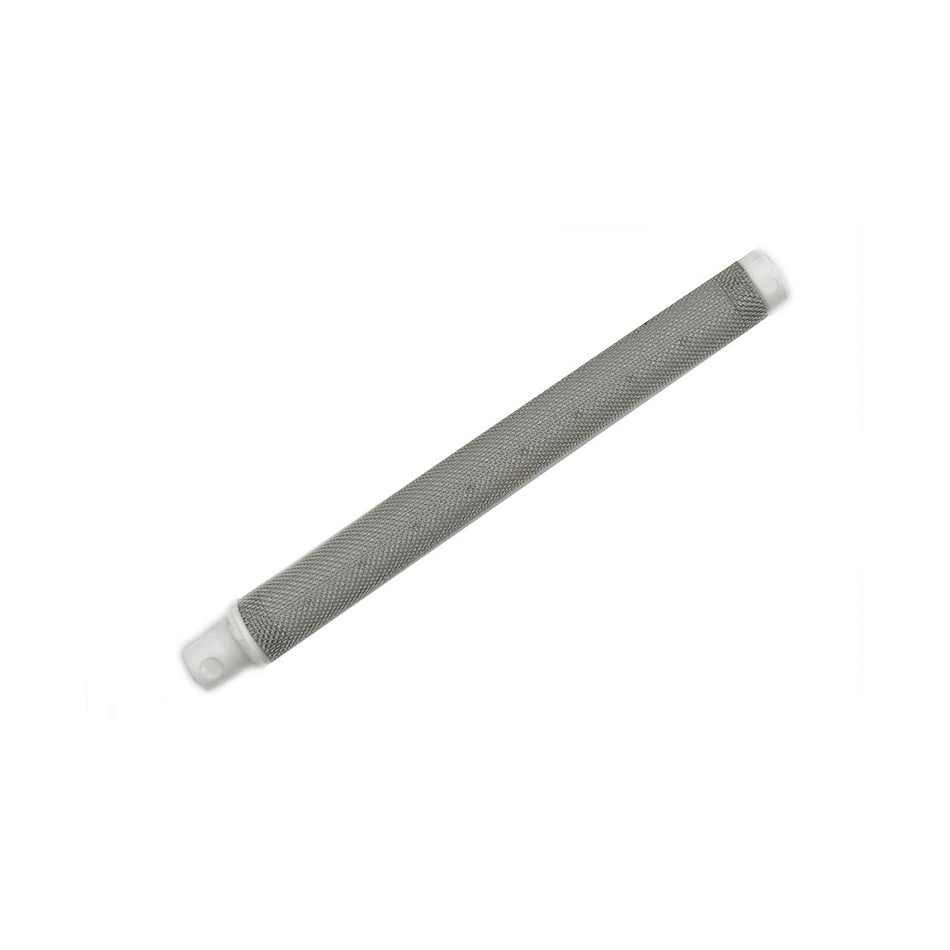
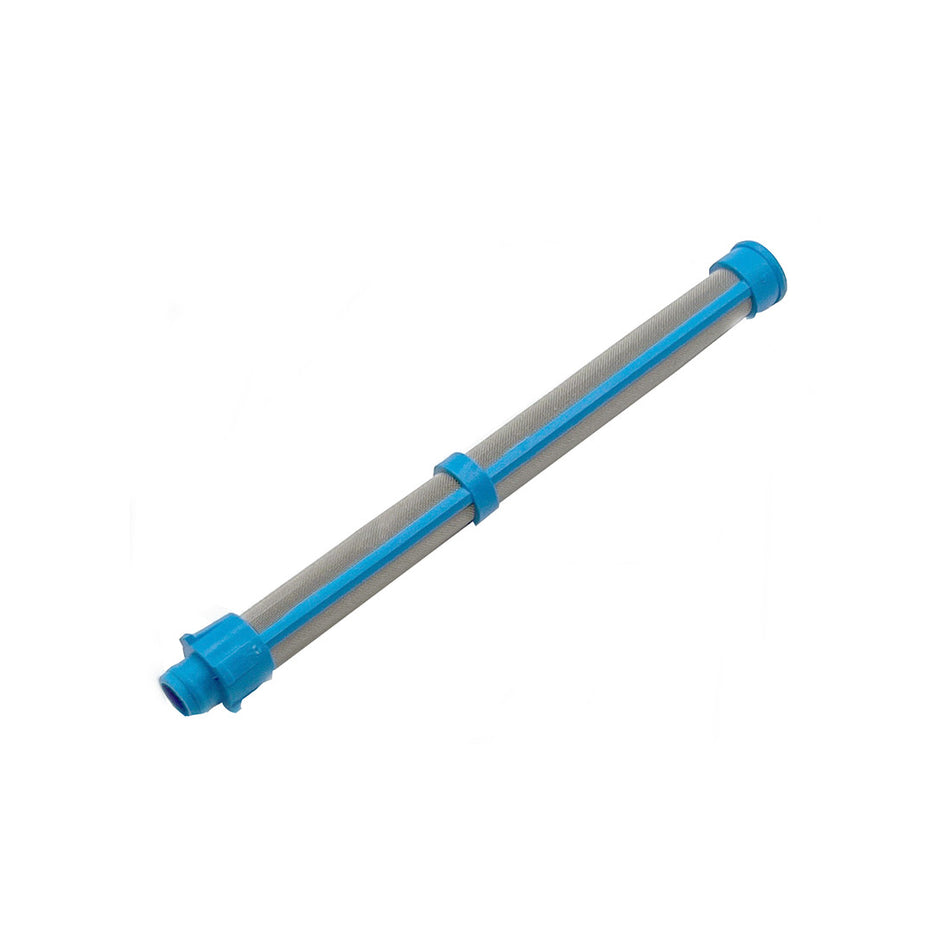
| Gun filters | Sit in the gun handle and give the last filtration before the tip. Stocked from 30 through 200 mesh. | When the tip plugs repeatedly, the pattern weakens, or the filter is deformed or split. These are consumables — keep spares in your working mesh. |
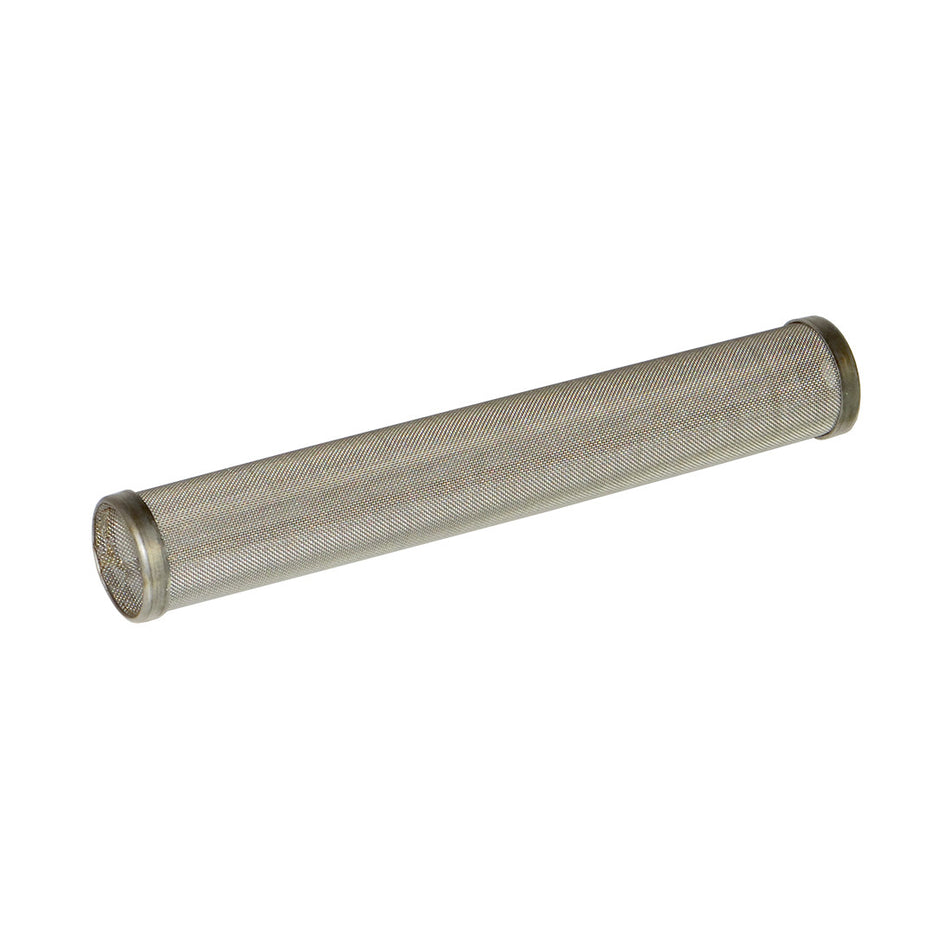
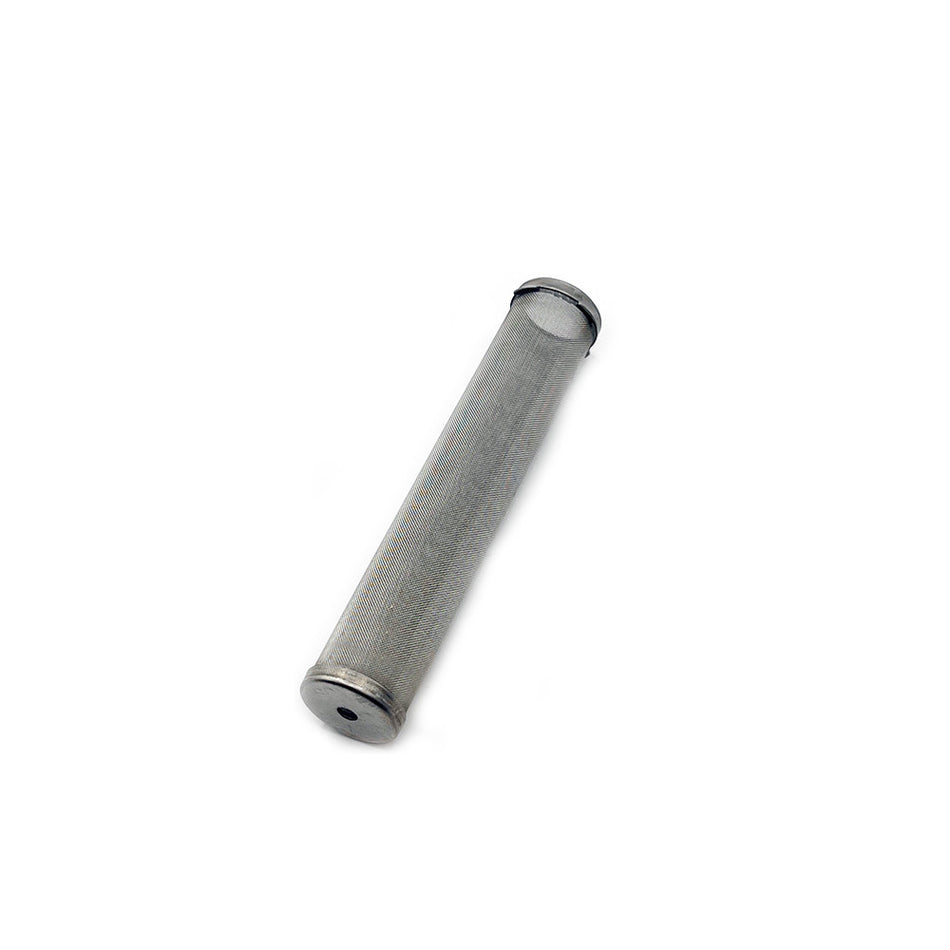
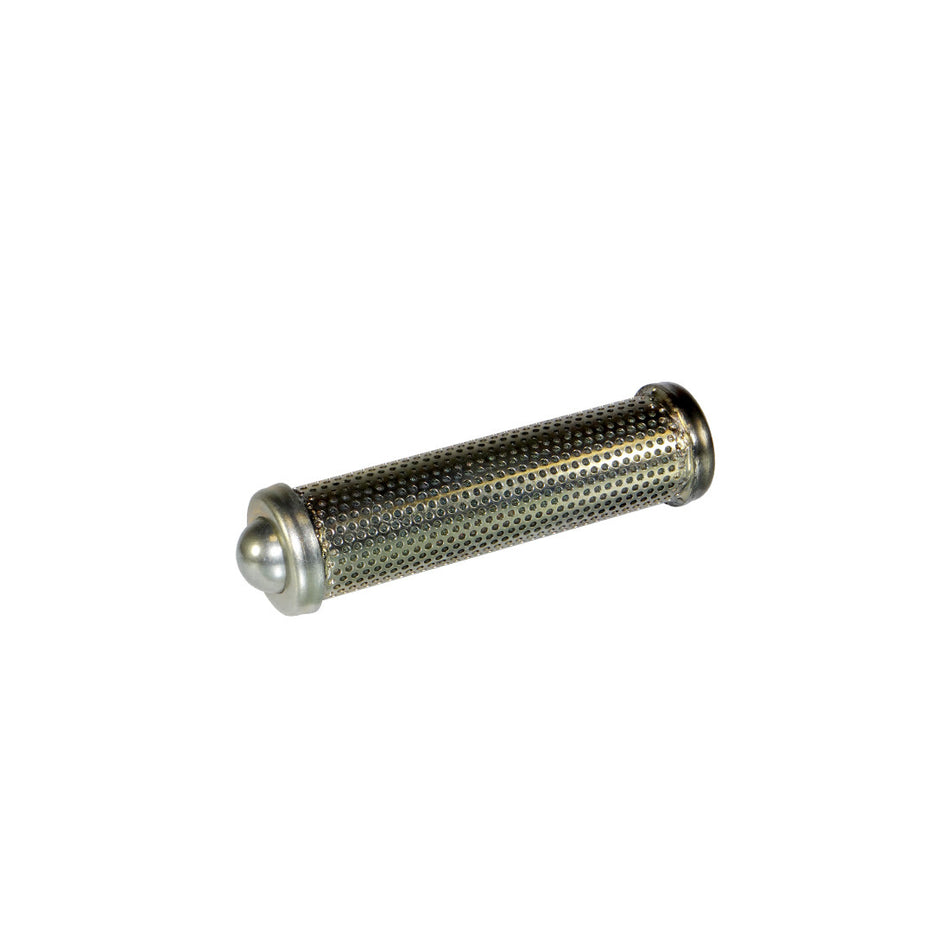
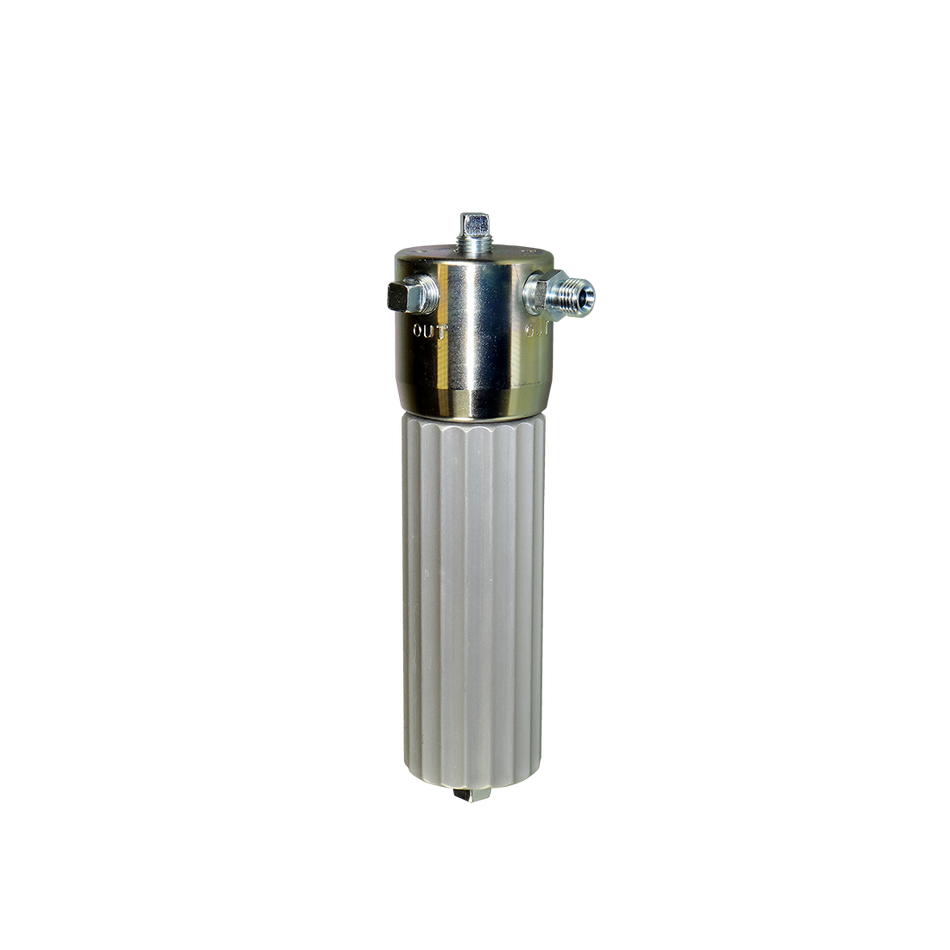
| Outlet and pump filters | Filter the material after the pump, protecting hose, gun, and tip. Available in long and short bodies to suit different machines. | On a regular service interval, and any time flow drops with a clean gun filter. |
| Outlet manifold filter elements | The replaceable element inside the outlet manifold housing. | When the element is blinded or damaged — usually cheaper than servicing the whole manifold. |
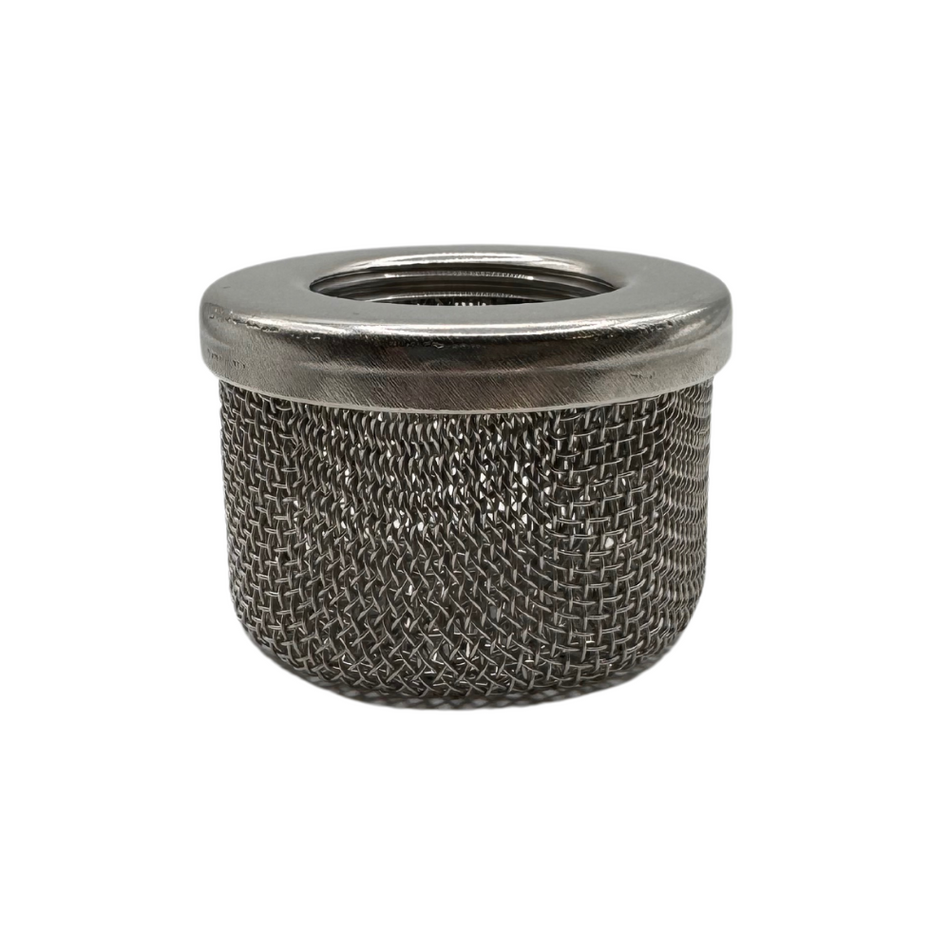
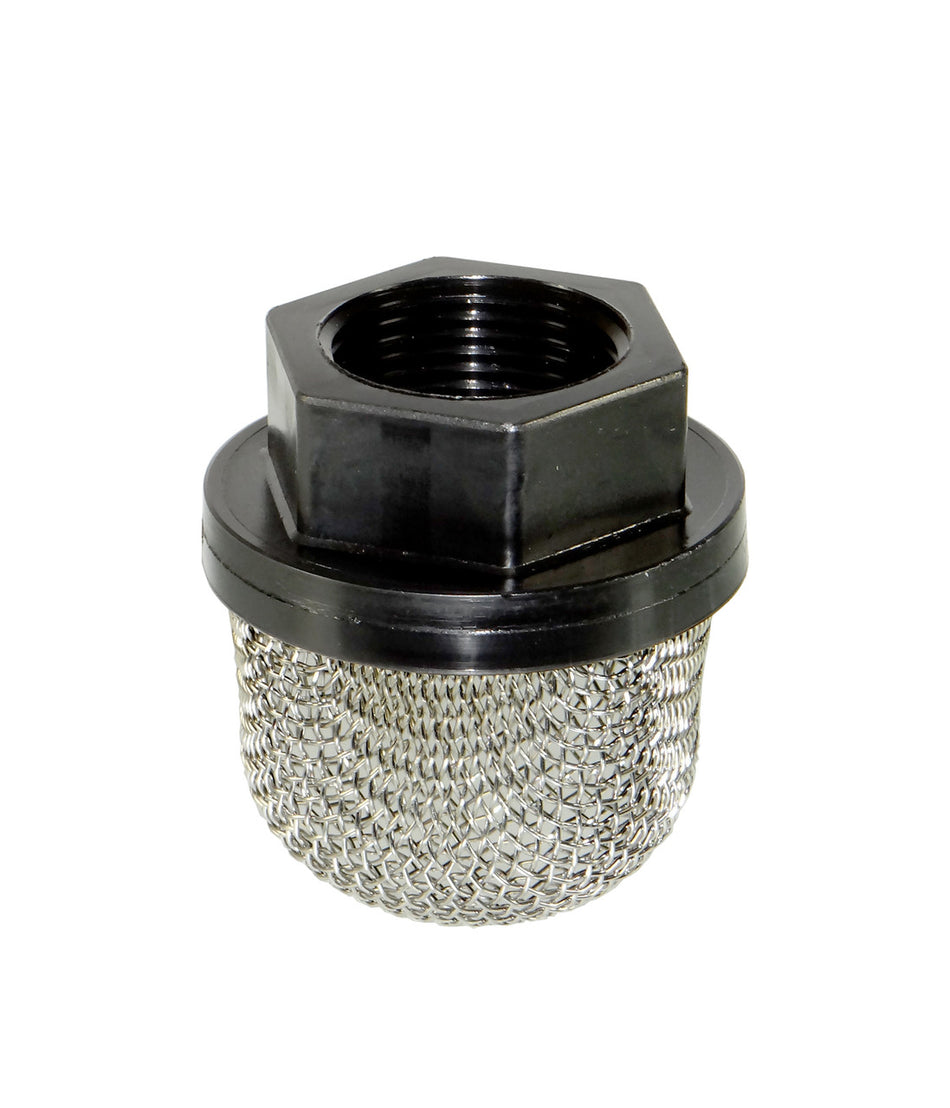
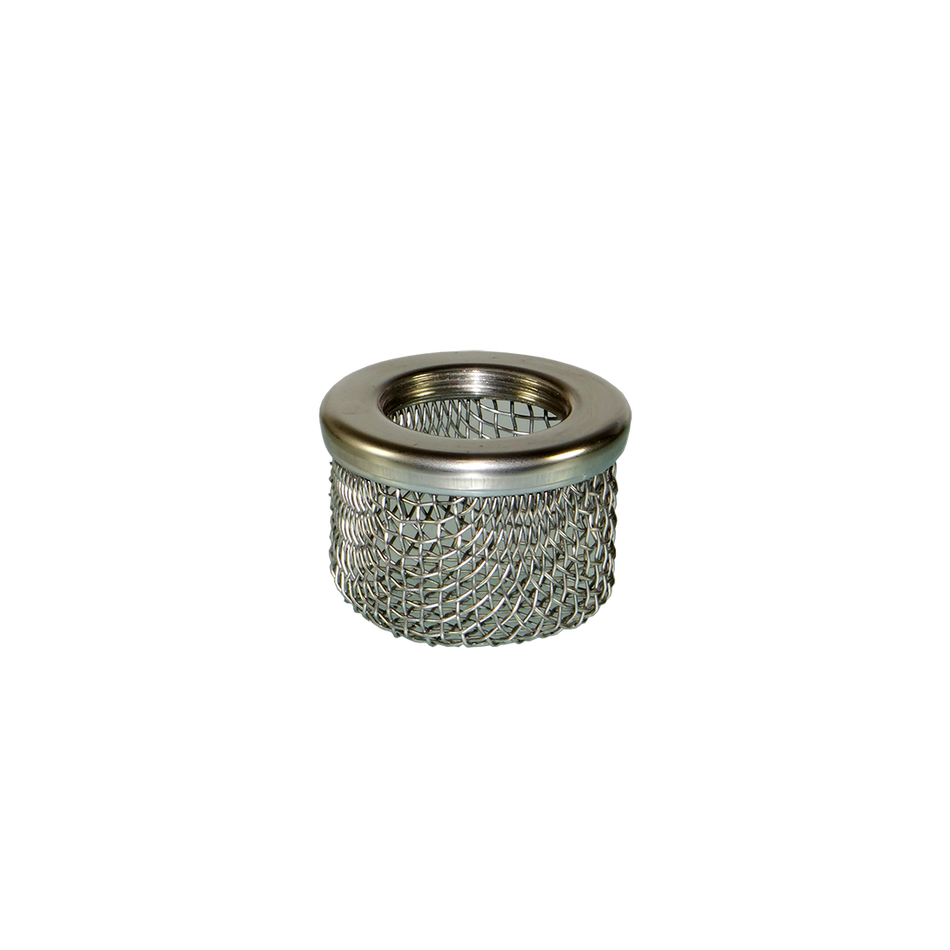
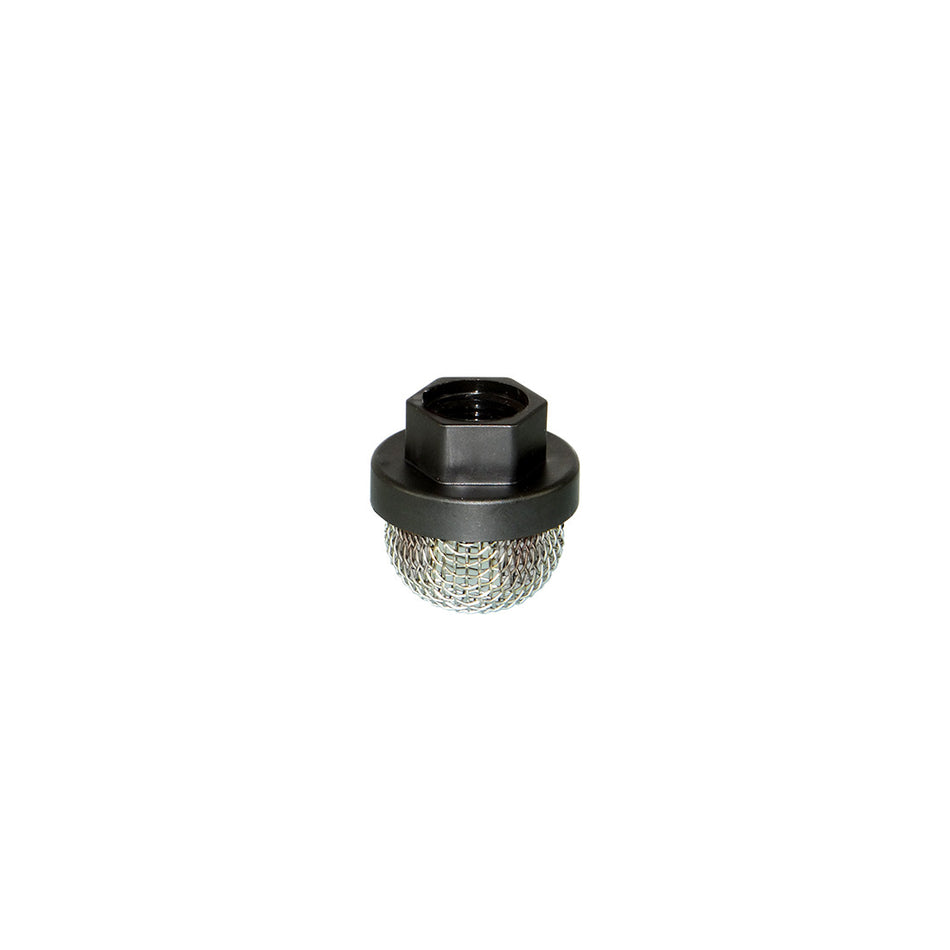
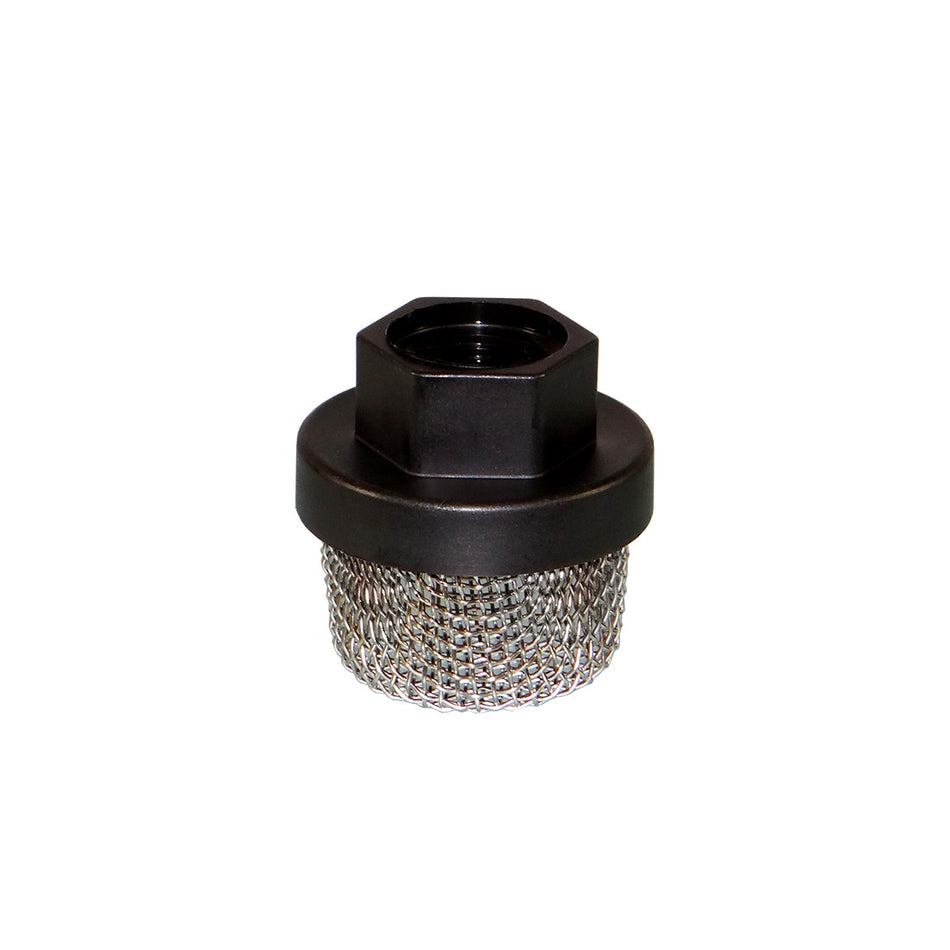
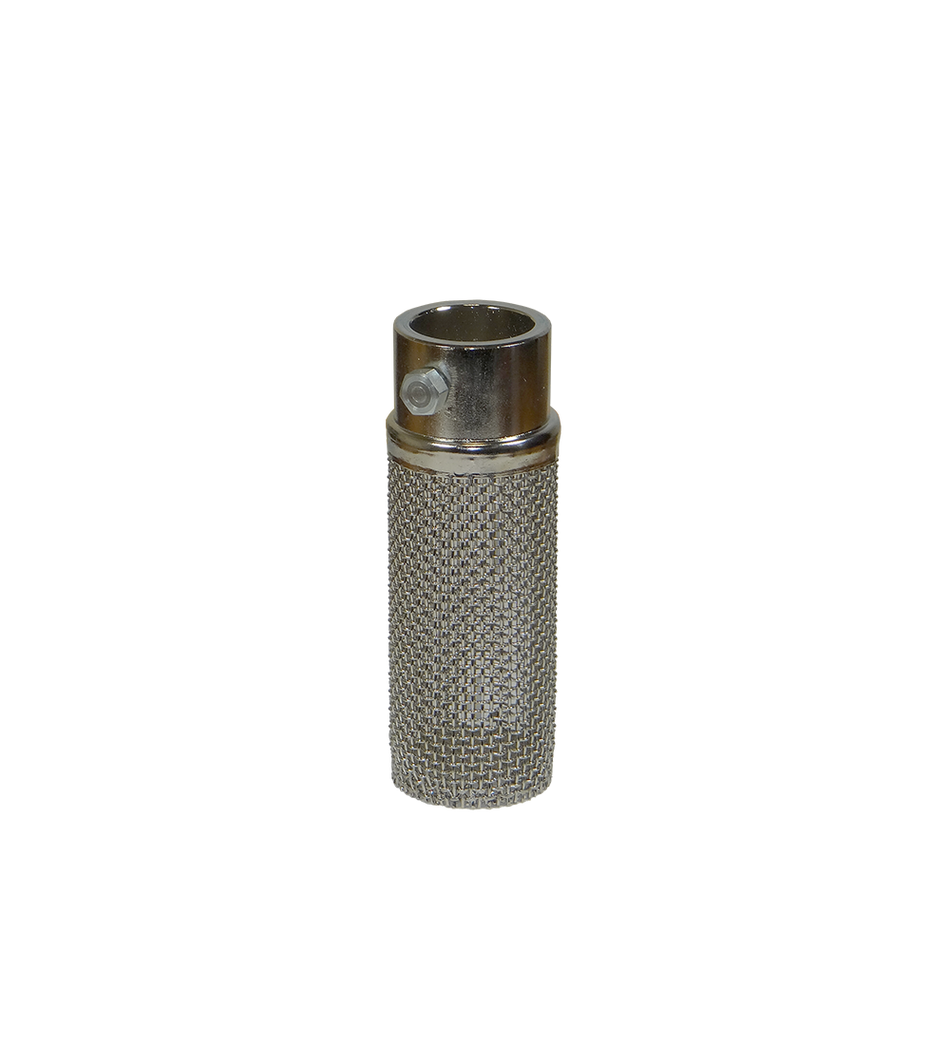
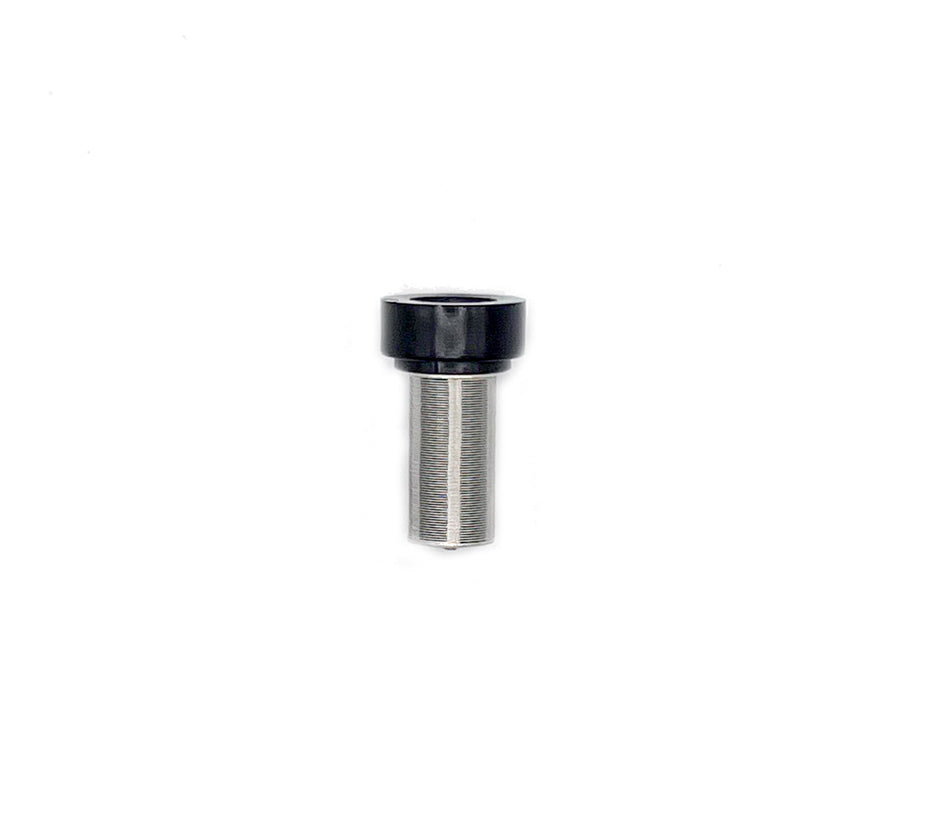
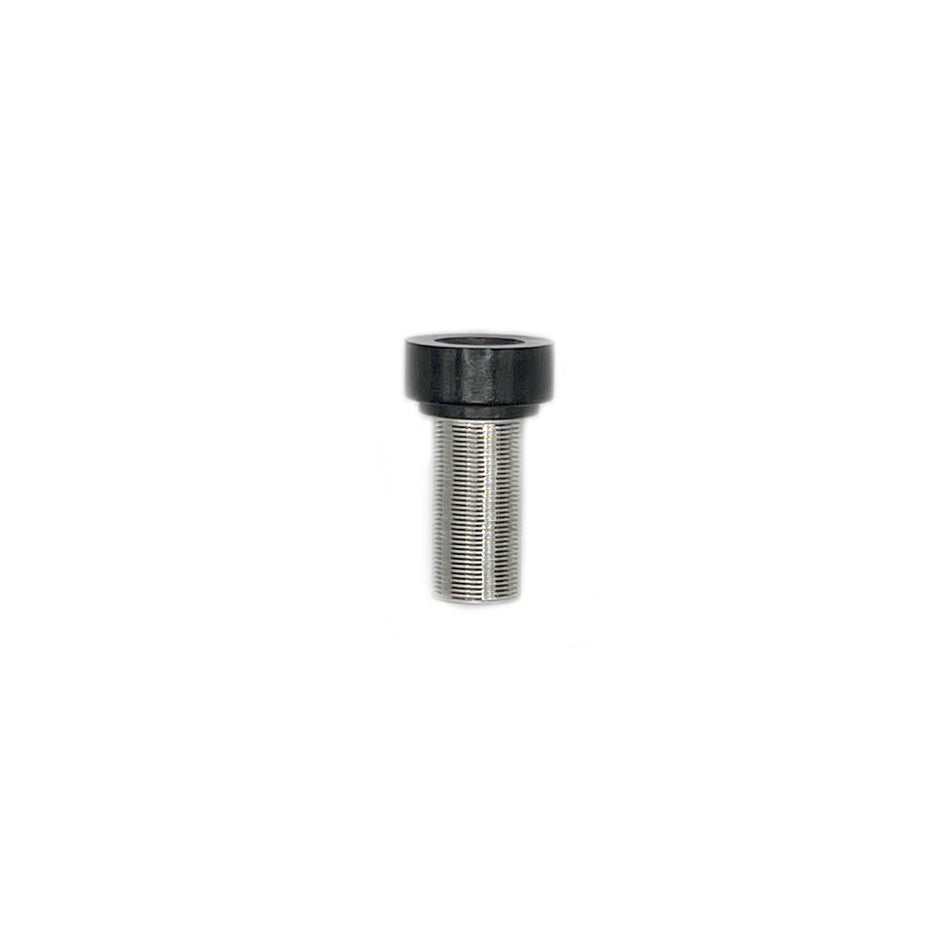
| Inlet strainers | Thread onto the suction tube and screen the material entering the pump. Sold in several thread sizes, including stainless steel versions. | When the pump struggles to prime or loses prime, or when the strainer is crushed or clogged. |
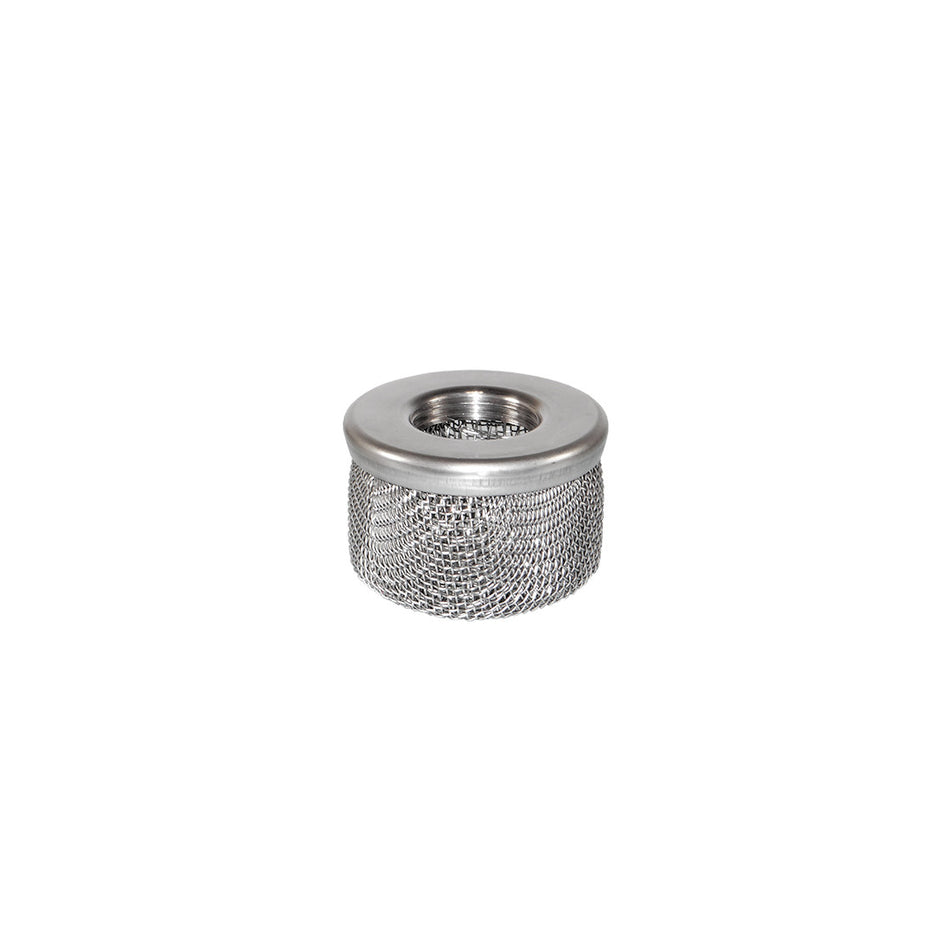
| Inlet screens | Perform the same job on machines that use a screen rather than a threaded strainer, and are matched to specific models. | Alongside pump service, or when debris is reaching the pump. |
| Rock catchers | Coarse pre-filters on the suction tube for materials with large debris. | When damaged, or when heavy material warrants extra protection at the inlet. |
| Cone paint strainers | Disposable cone strainers for filtering material into the bucket before it ever reaches the sprayer. | Every time you pour — straining at the bucket prevents most downstream filter problems. |
Filters & Strainers FAQ
What does the mesh number mean?
It is the number of openings per linear inch of screen. A higher number means smaller openings and finer filtration — 200 mesh is much finer than 30 mesh.
My tip keeps clogging. Which filter is at fault?
Start with the gun filter, since it is the last stage before the tip. If it is clean, check the outlet or pump filter, then the inlet strainer. Straining the material into the bucket with a cone strainer before it enters the sprayer prevents most of these problems.
Can I just run without a filter?
You can, and people do when a filter keeps blinding — but the debris then reaches the tip and the gun instead. The better fix is a coarser mesh suited to the material, not no filtration.
What mesh should I use for latex?
60 mesh is the usual choice for latex paints and primers. Use 100 mesh for thinner materials such as enamels and stains, and step down to 30 mesh for heavy latex and high-build coatings.
How often should filters be replaced?
Gun filters are consumables and should be cleaned at every flush and replaced when deformed, split, or no longer cleaning up. Pump and outlet filters go on a regular service interval. A filter that will not come clean is due.
Are these genuine OEM filters?
No — Bedford filters and strainers are compatible replacements, not genuine Graco, Titan, Wagner, or other OEM parts. Each is manufactured to OEM-equivalent dimensions so it fits and performs like the part it replaces, at a lower price.
Compatibility and cross-reference
Bedford filters and strainers are compatible replacements cross-referenced to the original manufacturers' part numbers, including Graco, Titan, Wagner, and Speeflo. Filters are machine-specific — search the OEM part number from your equipment manual, dashes optional, or open the Custom Lookup Tool to match filters to your sprayer. Related ranges: standard tips, tip guards and accessories, and pump repair kits.
BEDFORD® and BEDFORD PRECISION PARTS™ are proprietary marks of Bedford Precision Parts, LLC ("Bedford"). All other listed marks are proprietary to their respective owners and are not affiliated with Bedford.