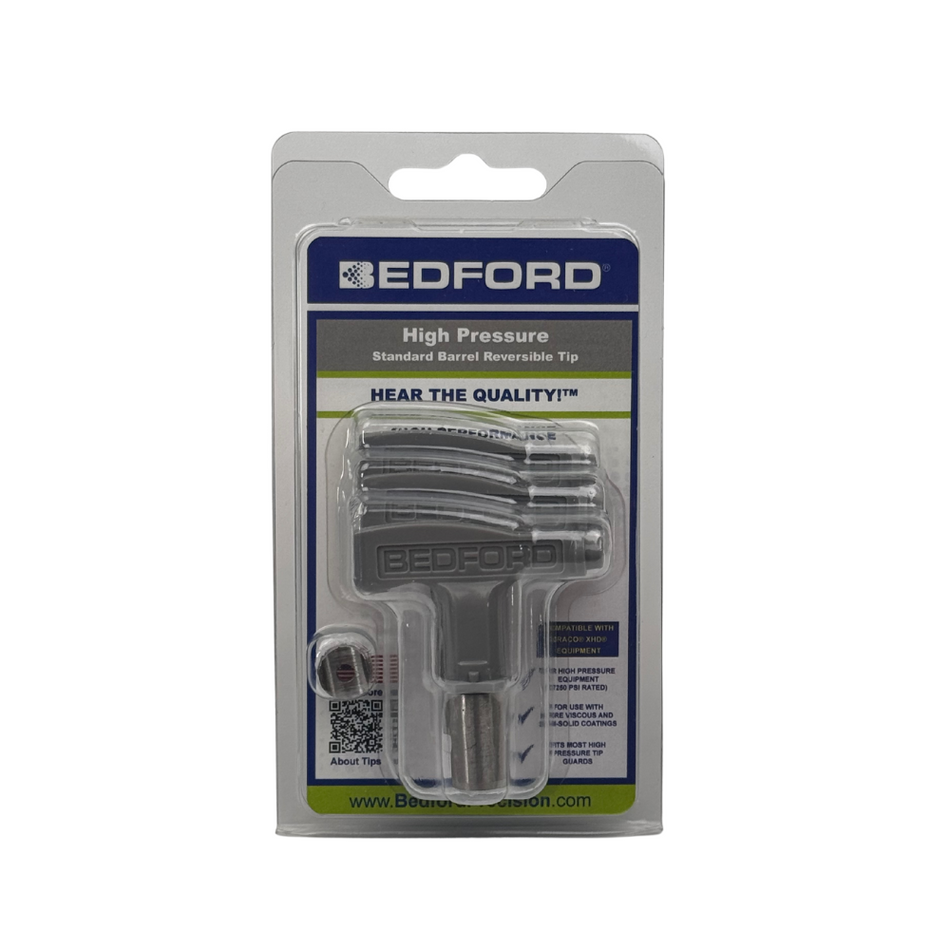
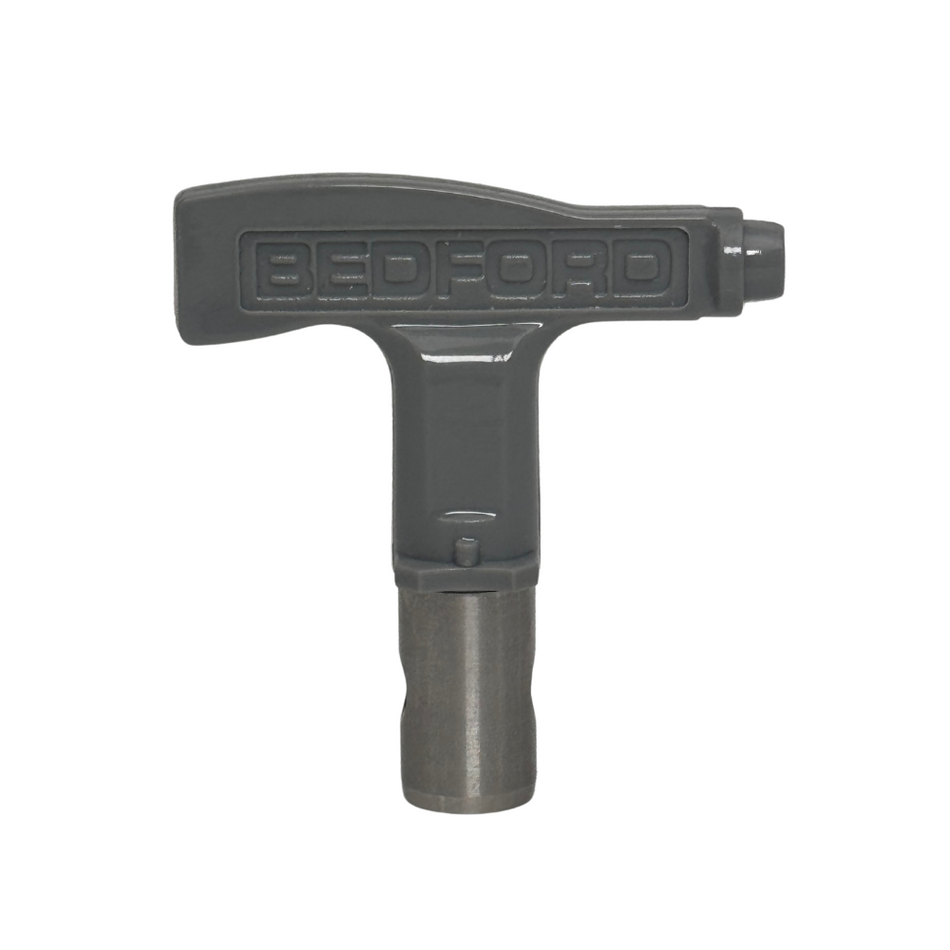
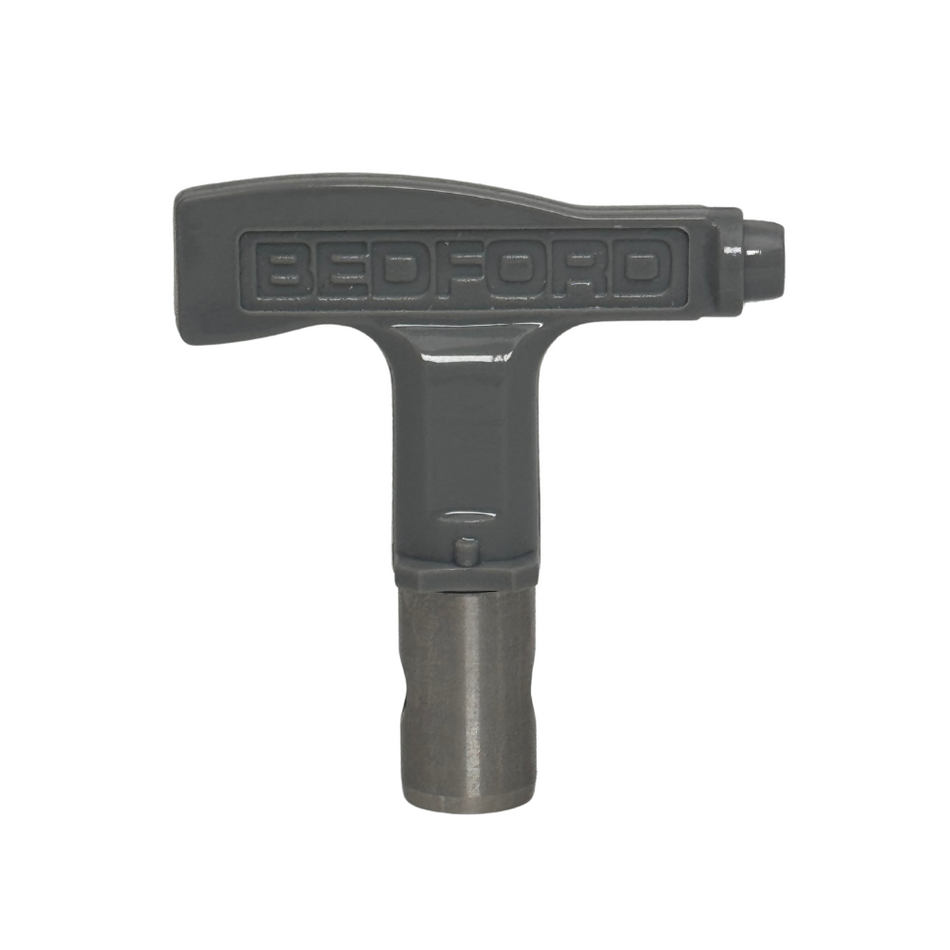
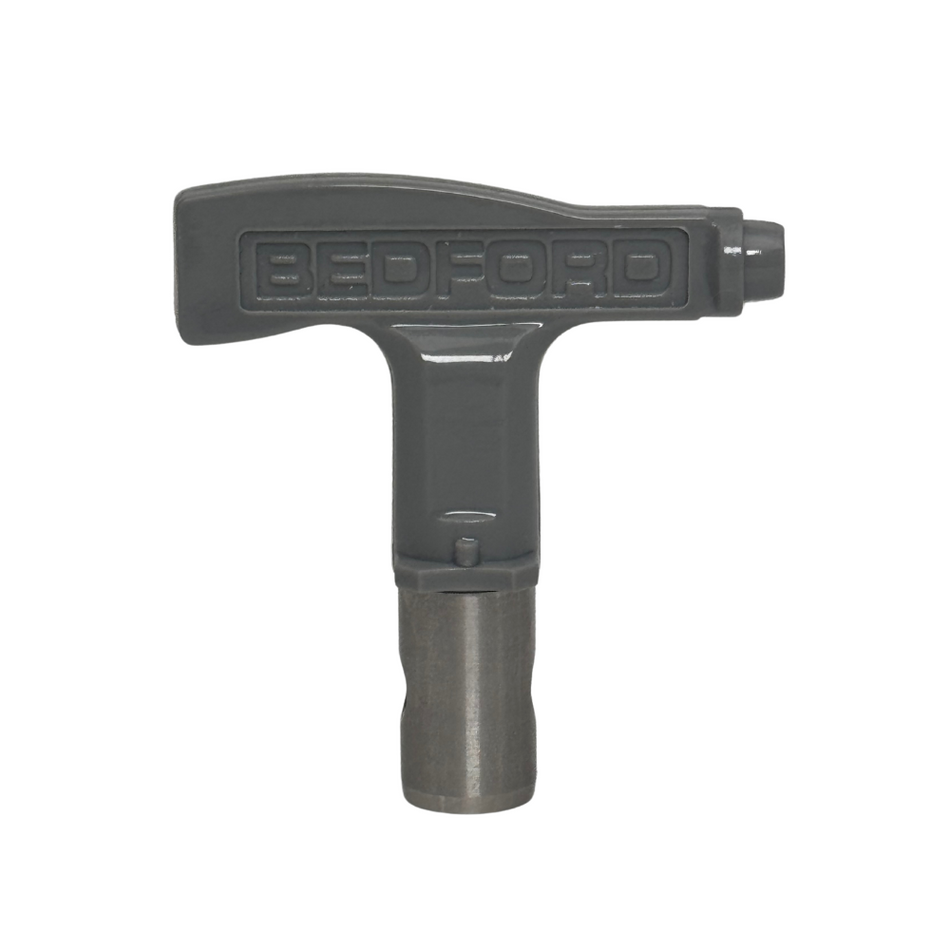
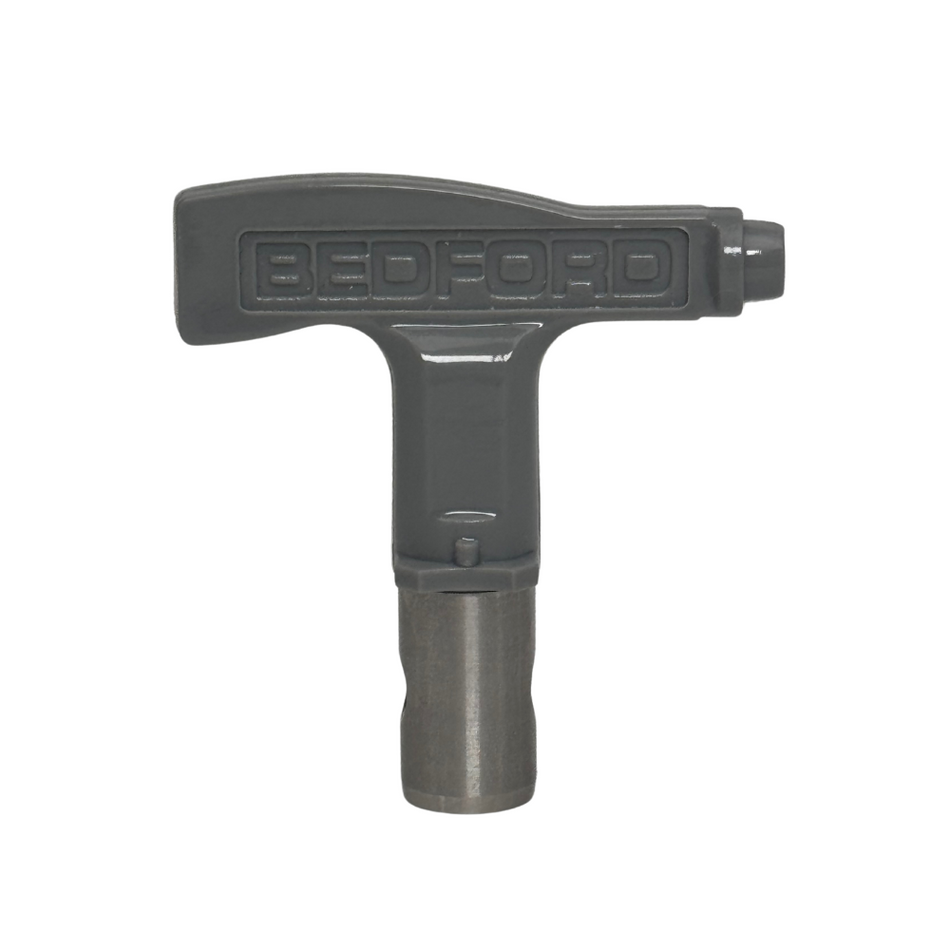
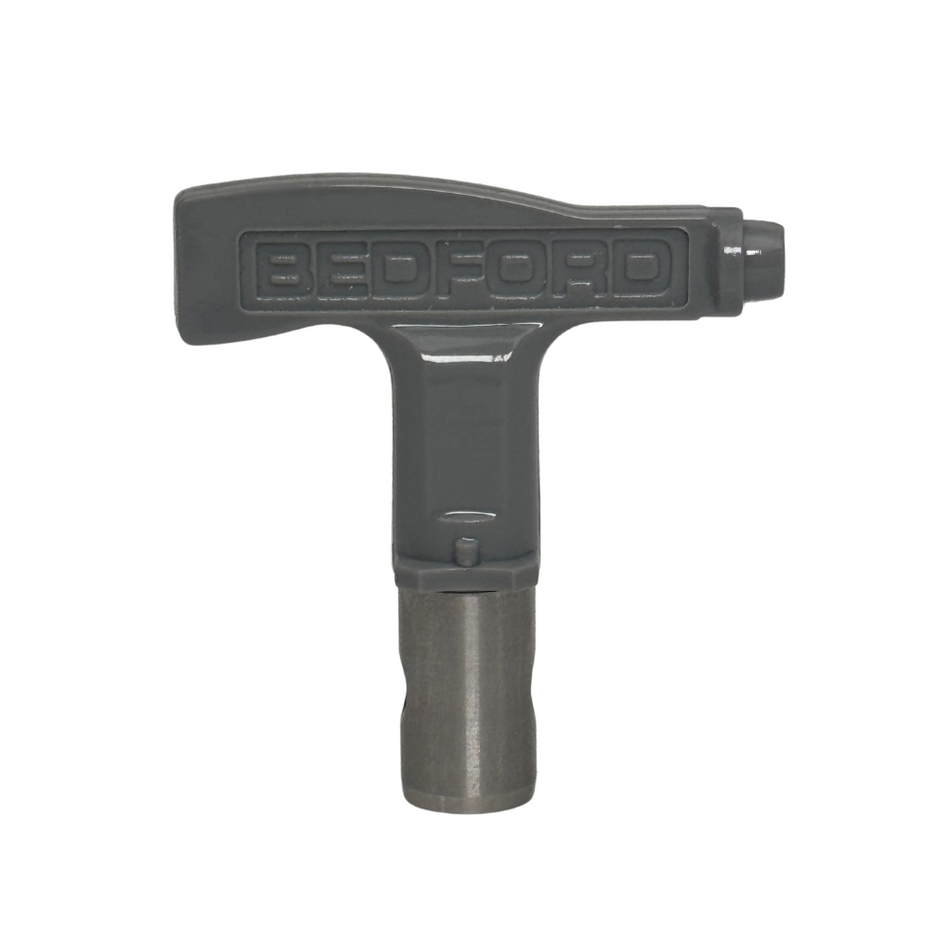
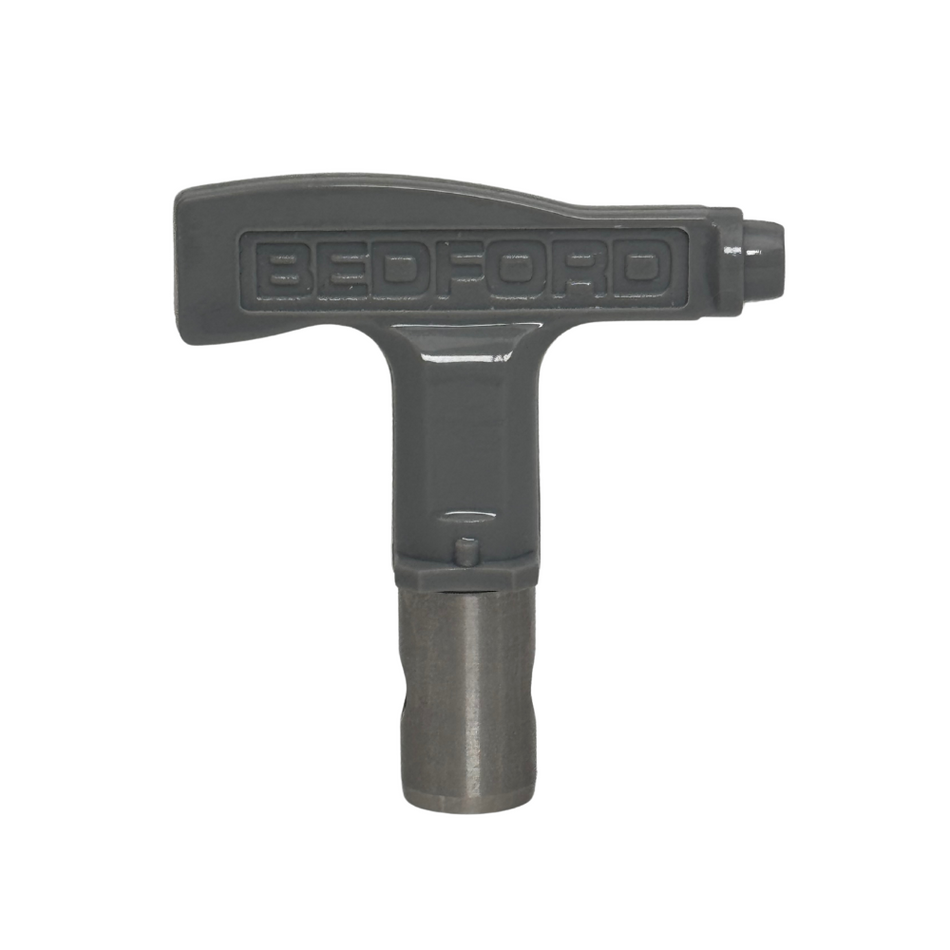
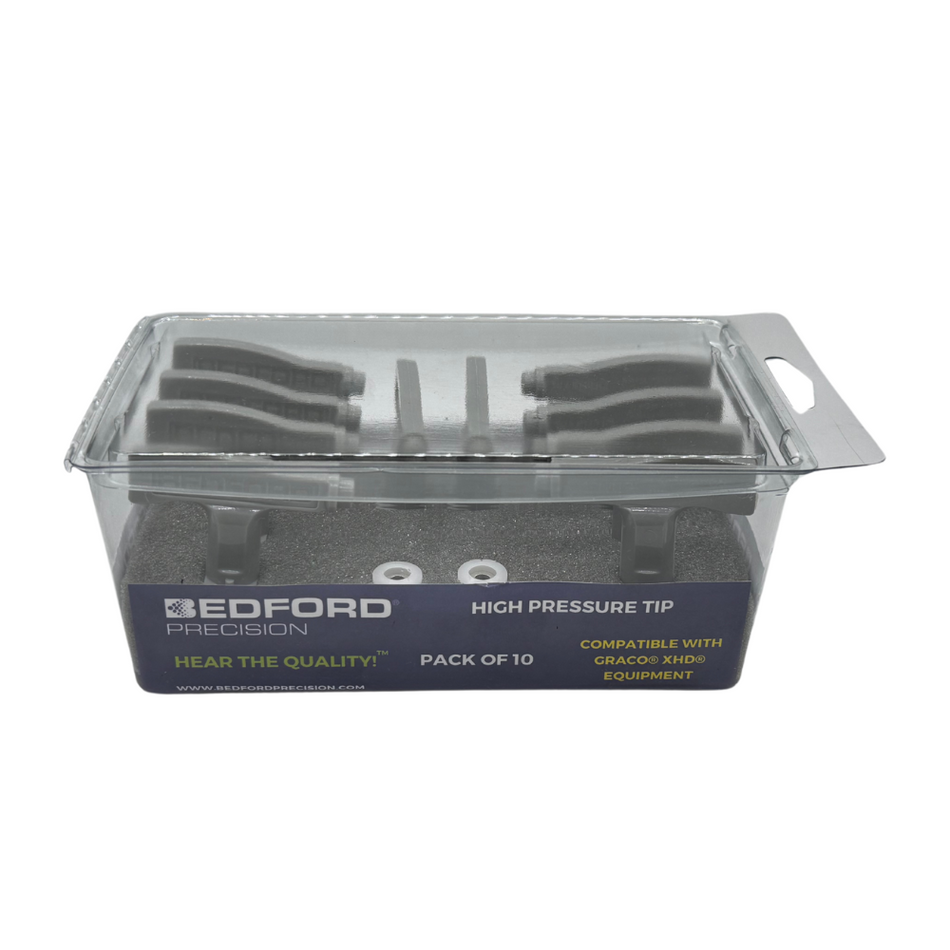
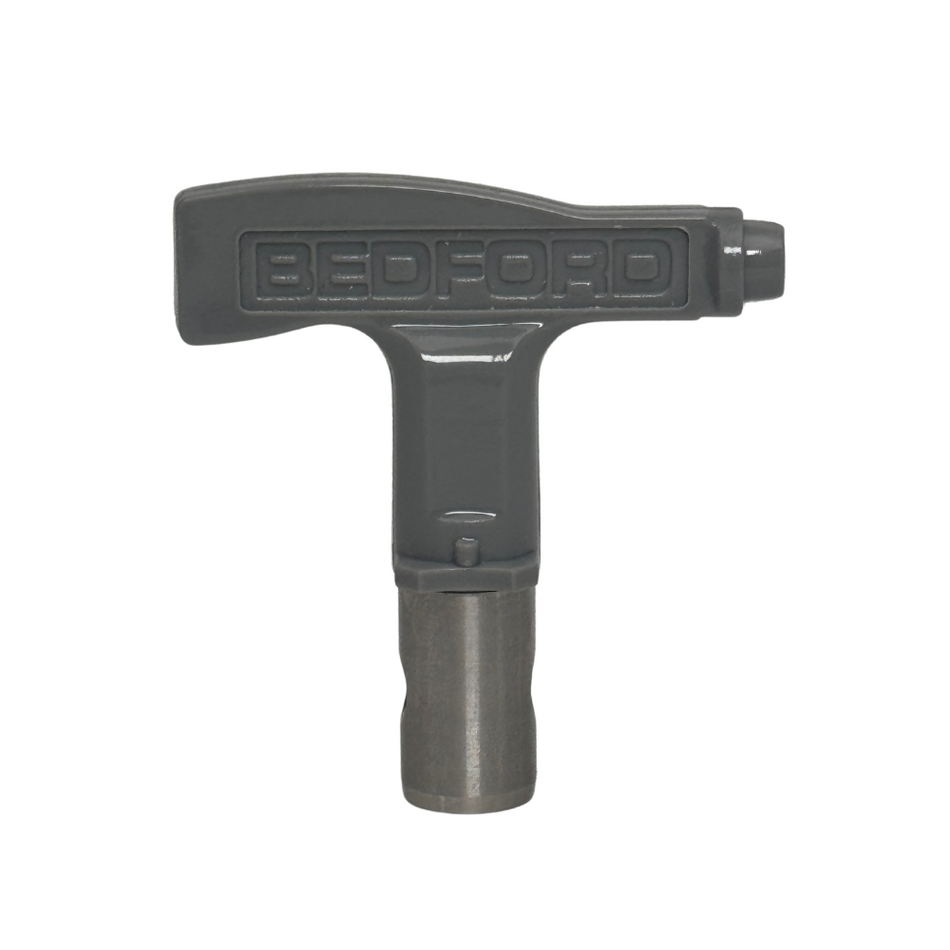
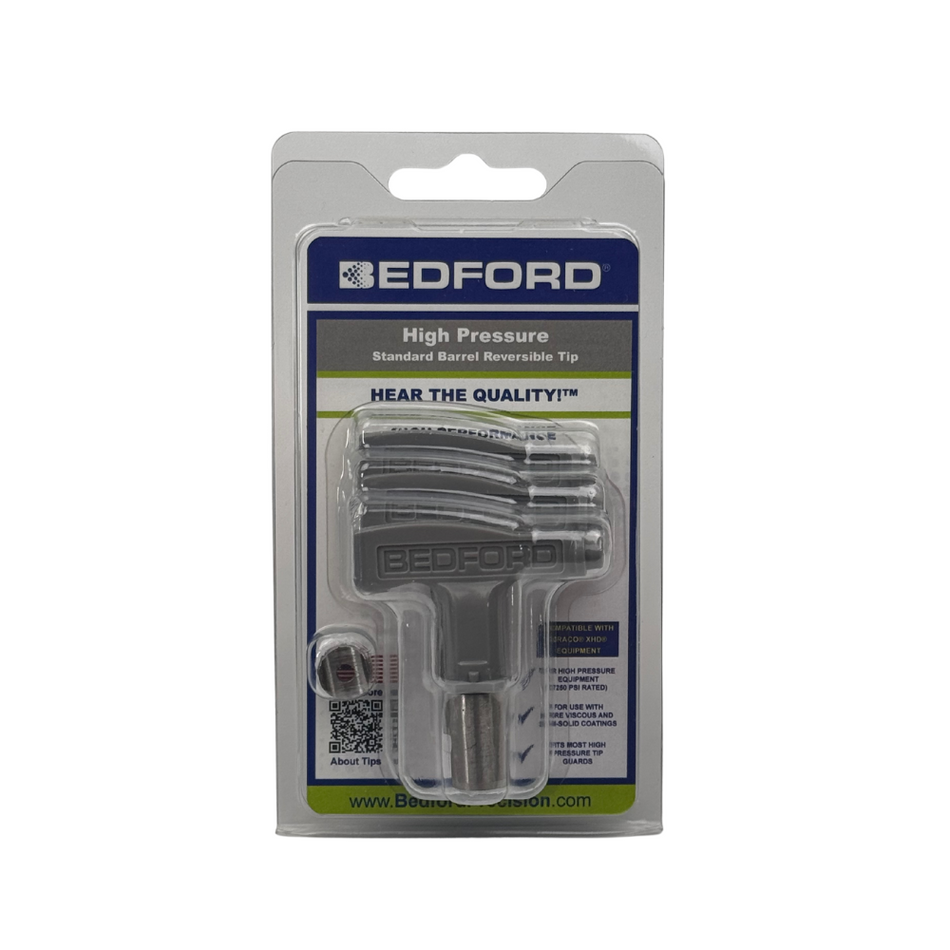
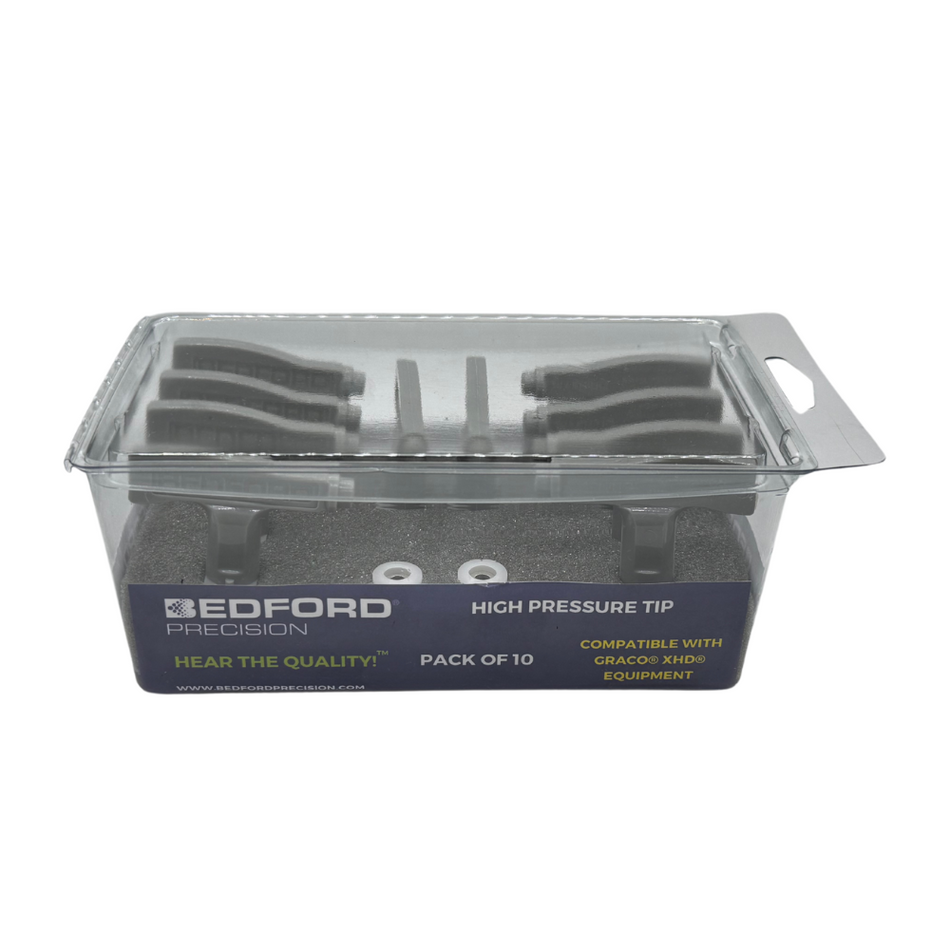
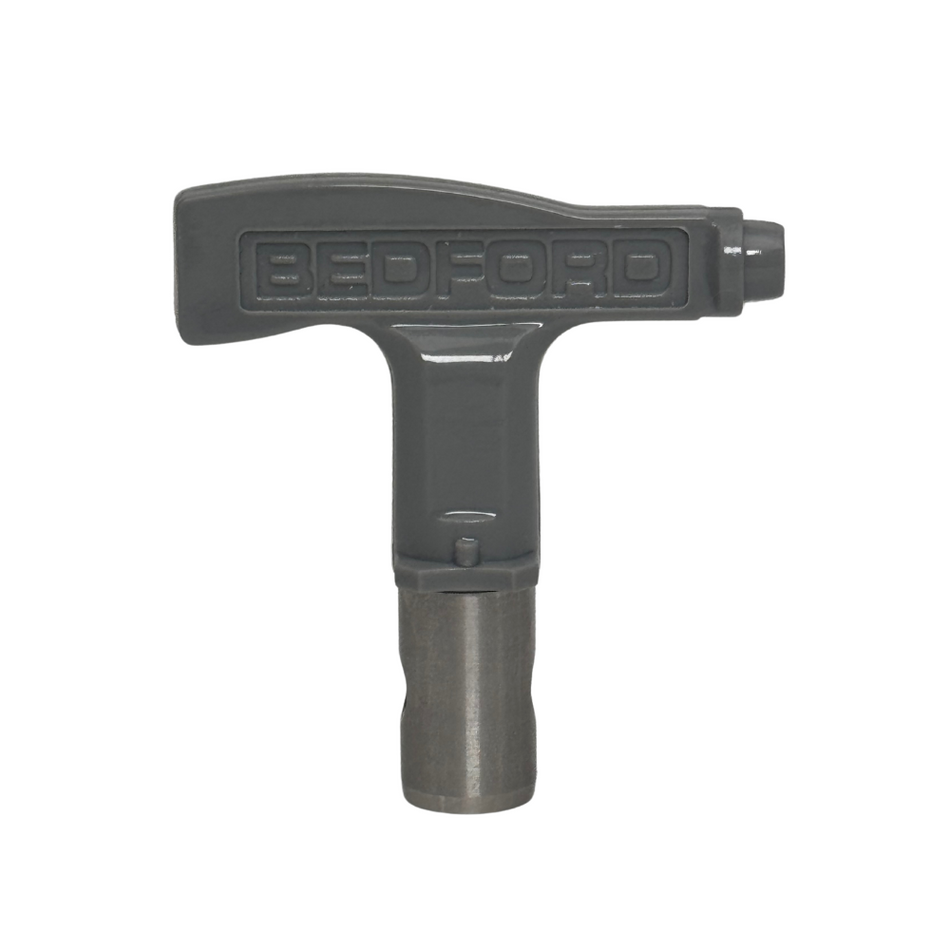
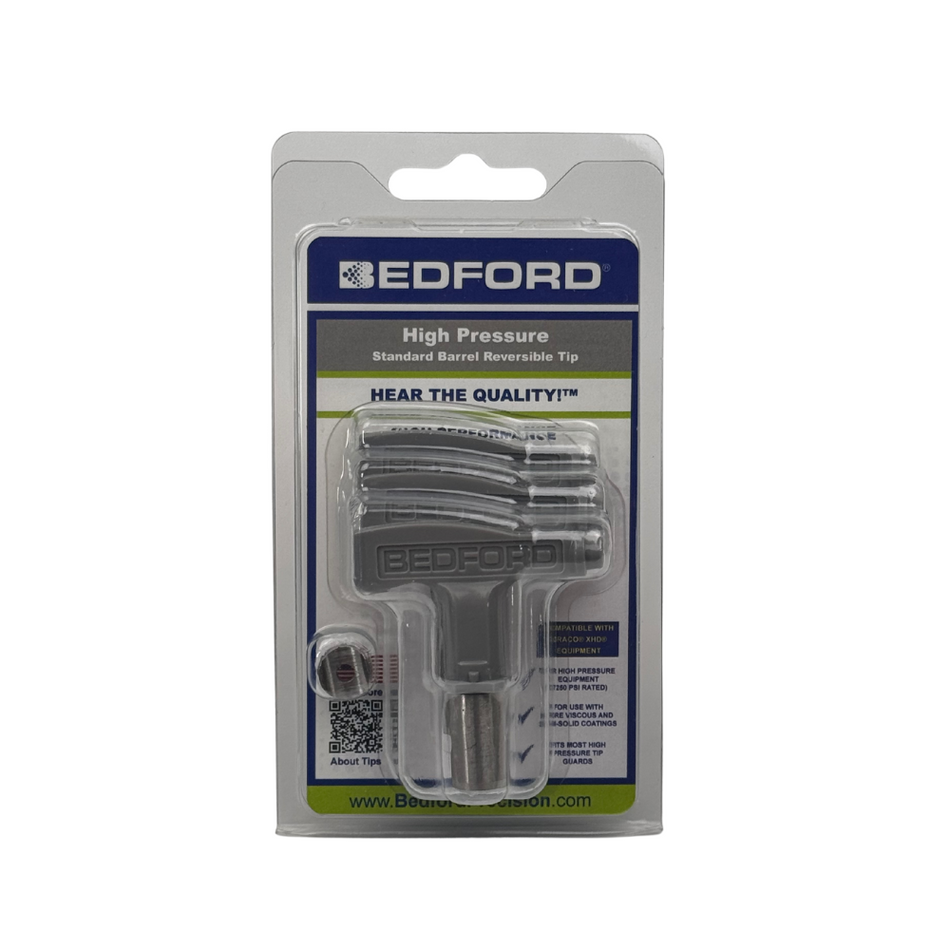
What makes a tip a high pressure tip
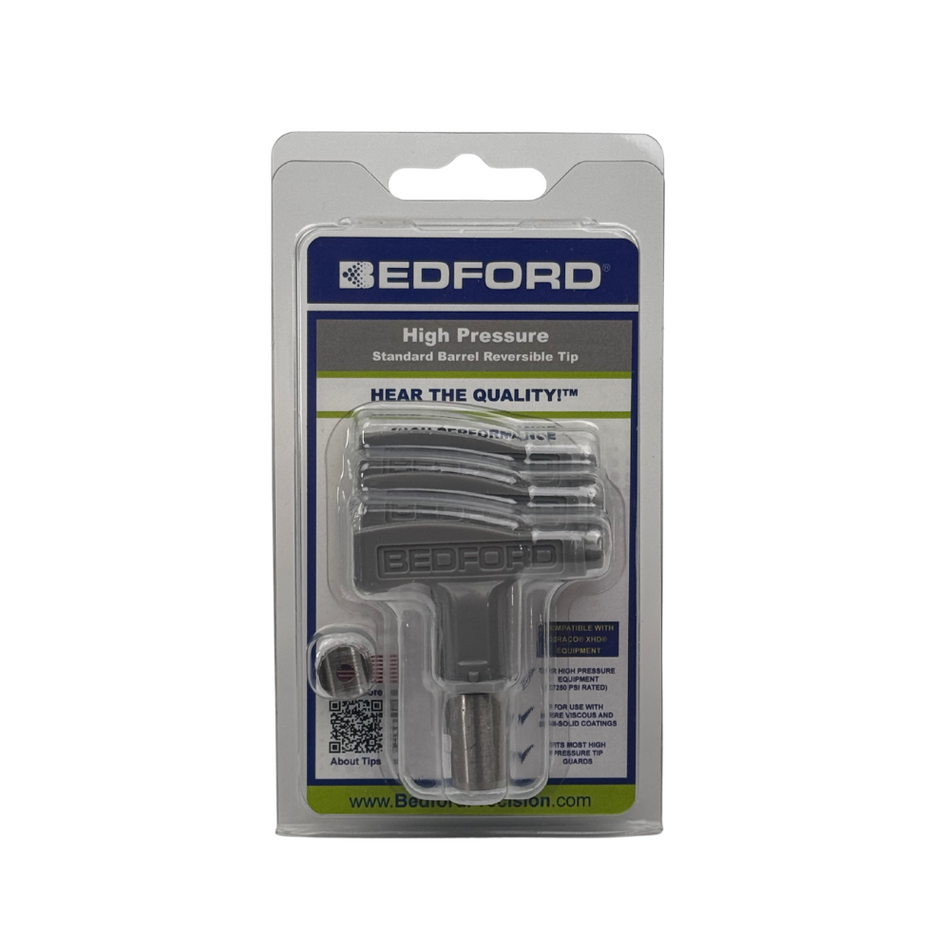
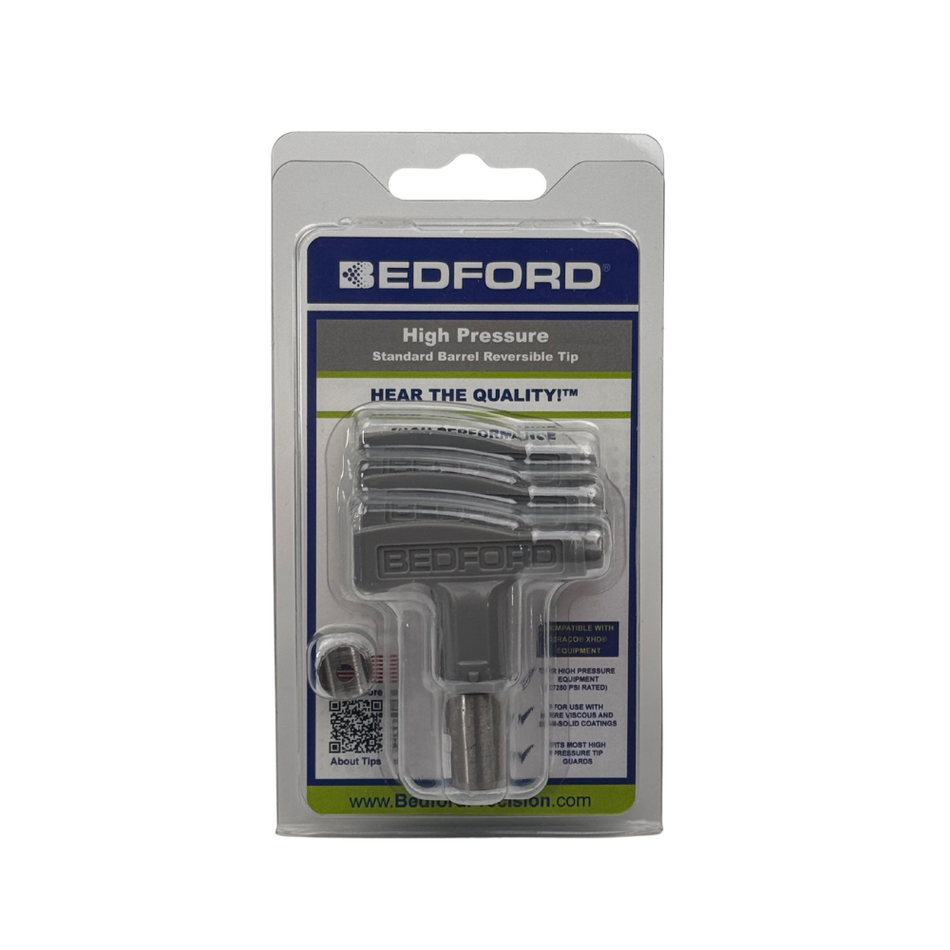
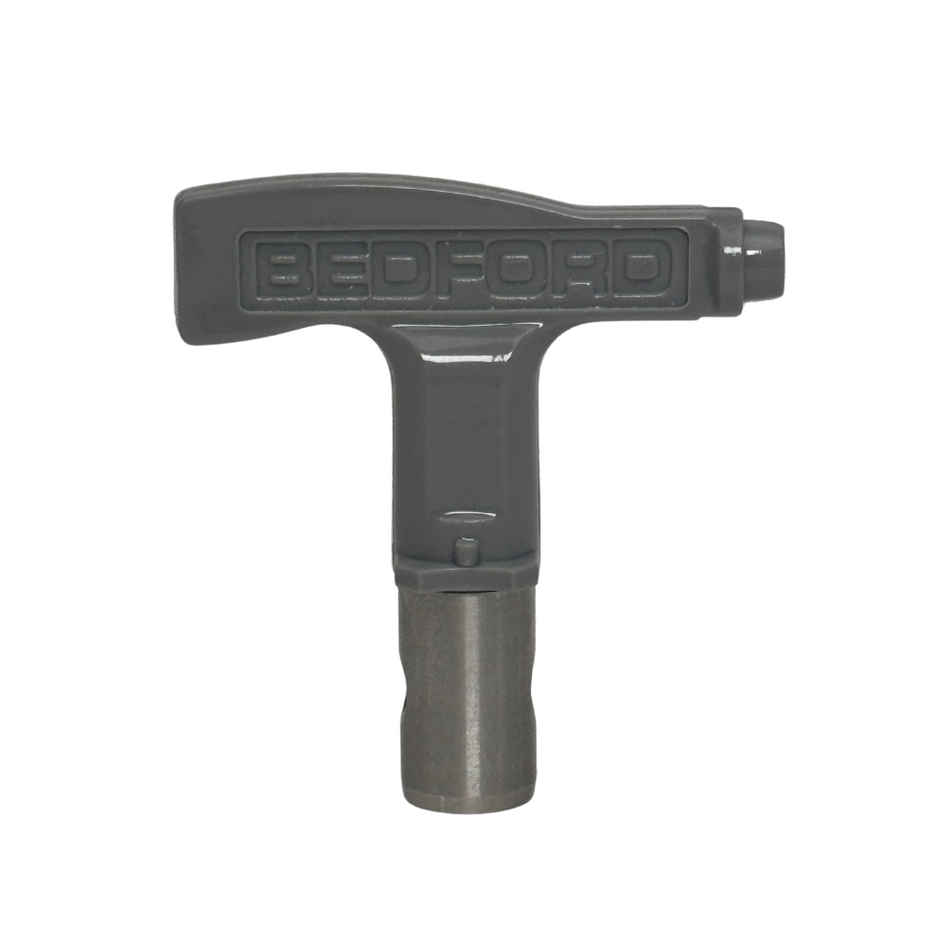
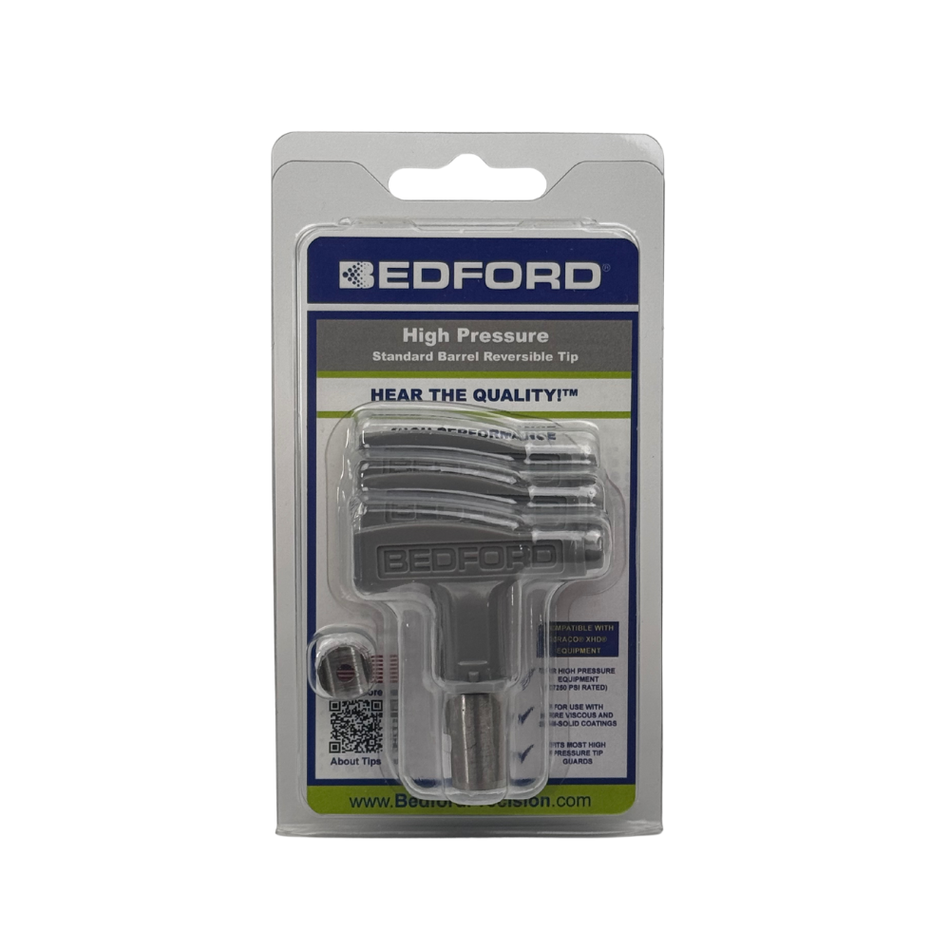
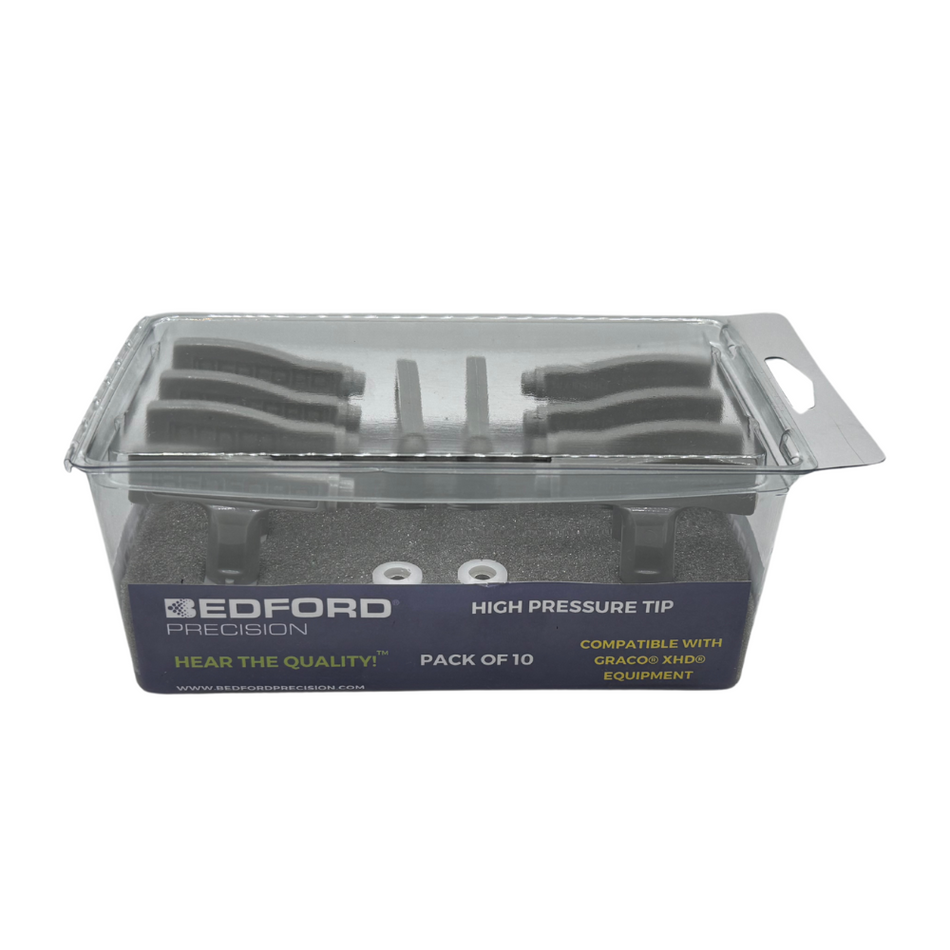
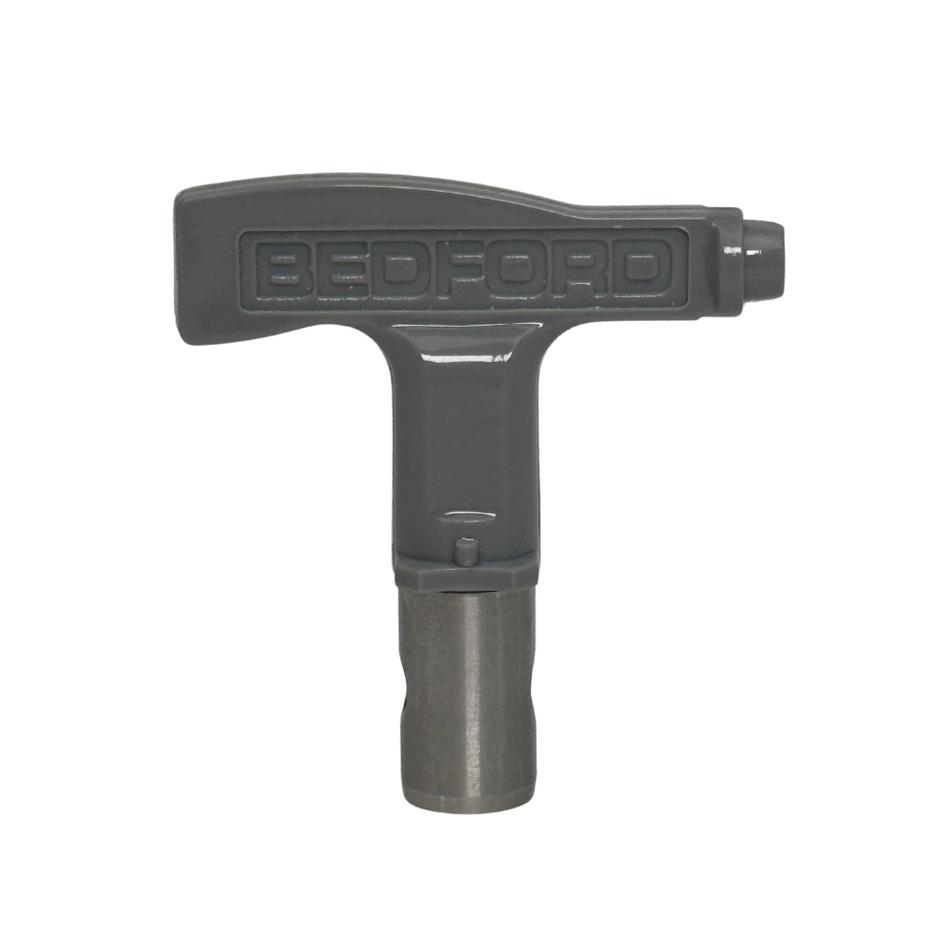
These tips are built for equipment that runs well above ordinary airless working pressure, and they are rated to 7250 PSI. Two things follow from that:
- They fit XHD style guards, not the standard-barrel or RAC X guards used by general-purpose tips. The barrel is different, so the ranges are not interchangeable.
- They carry the largest orifices Bedford stocks — up to .055" — because the materials they spray are heavy: elastomerics, block fillers, intumescent coatings, and high-build industrial products.
A high pressure tip is not a way to make a small sprayer spray thick material. The pump has to supply both the pressure and the volume the tip passes; check your equipment's maximum tip rating before sizing up.
How to read a tip number
- First digit × 2 = fan width in inches, measured about 12" from the surface. A 531 sprays roughly a 10–12" fan.
- Last two digits = orifice size in thousandths of an inch. A 531 has a .031" orifice.
Pick the orifice the material needs first, then the fan width that suits the surface.
High pressure tip size chart
All 94 sizes below are rated to 7250 PSI and stocked as singles, 3-packs, and 10-packs. Select a tip number to open its product page.
| Tip | Orifice | Fan width |
|---|
| 100 series — 2–4" fan · narrowest fan — detail and touch-up |
| 107 | .007" | 2–4" |
| 109 | .009" | 2–4" |
| 111 | .011" | 2–4" |
| 113 | .013" | 2–4" |
| 117 | .017" | 2–4" |
| 121 | .021" | 2–4" |
| 200 series — 4–6" fan · trim, railings, and medium detail |
| 207 | .007" | 4–6" |
| 209 | .009" | 4–6" |
| 211 | .011" | 4–6" |
| 213 | .013" | 4–6" |
| 215 | .015" | 4–6" |
| 217 | .017" | 4–6" |
| 219 | .019" | 4–6" |
| 221 | .021" | 4–6" |
| 223 | .023" | 4–6" |
| 225 | .025" | 4–6" |
| 227 | .027" | 4" |
| 300 series — 6–8" fan · doors, cabinets, and medium surfaces |
| 307 | .007" | 6–8" |
| 309 | .009" | 6–8" |
| 311 | .011" | 6–8" |
| 313 | .013" | 6–8" |
| 315 | .015" | 6–8" |
| 317 | .017" | 6–8" |
| 319 | .019" | 6–8" |
| 321 | .021" | 6–8" |
| 323 | .023" | 6–8" |
| 325 | .025" | 6–8" |
| 327 | .027" | 6–8" |
| 331 | .031" | 6–8" |
| 400 series — 8–10" fan · doors, panels, and general work |
| 409 | .009" | 8–10" |
| 411 | .011" | 8–10" |
| 413 | .013" | 8–10" |
| 415 | .015" | 8–10" |
| 417 | .017" | 8–10" |
| 419 | .019" | 8–10" |
| 421 | .021" | 8–10" |
| 423 | .023" | 8–10" |
| 425 | .025" | 8–10" |
| 427 | .027" | 8–10" |
| 429 | .029" | 8–10" |
| 431 | .031" | 8–10" |
| 435 | .035" | 8–10" |
| 437 | .037" | 8–10" |
| 443 | .043" | 8–10" |
| 445 | .045" | 8–10" |
| 447 | .047" | 8–10" |
| 449 | .049" | 8–10" |
| 455 | .055" | 8–10" |
| 500 series — 10–12" fan · siding, large walls, and broad surfaces |
| 509 | .009" | 10–12" |
| 511 | .011" | 10–12" |
| 513 | .013" | 10–12" |
| 515 | .015" | 10–12" |
| 517 | .017" | 10–12" |
| 519 | .019" | 10–12" |
| 521 | .021" | 10–12" |
| 523 | .023" | 10–12" |
| 525 | .025" | 10–12" |
| 527 | .027" | 10–12" |
| 529 | .029" | 10–12" |
| 531 | .031" | 10–12" |
| 533 | .033" | 10–12" |
| 535 | .035" | 10–12" |
| 537 | .037" | 10–12" |
| 539 | .039" | 10–12" |
| 541 | .041" | 10–12" |
| 543 | .043" | 10–12" |
| 545 | .045" | 10–12" |
| 551 | .051" | 10–12" |
| 600 series — 12–14" fan · large walls and exteriors |
| 611 | .011" | 12–14" |
| 613 | .013" | 12–14" |
| 615 | .015" | 12–14" |
| 617 | .017" | 12–14" |
| 619 | .019" | 12–14" |
| 621 | .021" | 12–14" |
| 623 | .023" | 12–14" |
| 625 | .025" | 12–14" |
| 627 | .027" | 12–14" |
| 629 | .029" | 12–14" |
| 631 | .031" | 12–14" |
| 633 | .033" | 12–14" |
| 635 | .035" | 12–14" |
| 700 series — 14–16" fan · wide fan — large flat surfaces |
| 717 | .017" | 14–16" |
| 721 | .021" | 14–16" |
| 723 | .023" | 14–16" |
| 725 | .025" | 14–16" |
| 731 | .031" | 14–16" |
| 800 series — 16–18" fan · widest fan — maximum coverage |
| 815 | .015" | 16–18" |
| 817 | .017" | 16–18" |
| 819 | .019" | 16–18" |
| 821 | .021" | 16–18" |
| 823 | .023" | 16–18" |
| 827 | .027" | 16–18" |
| 831 | .031" | 16–18" |
| 835 | .035" | 16–18" |
Choosing an orifice for heavy materials
| Orifice | Typical materials |
|---|
| .007"–.015" | Thinner industrial coatings and detail work where a high-pressure gun is already in hand. |
| .015"–.023" | Industrial enamels, primers, and mid-weight protective coatings. |
| .023"–.031" | Heavy-bodied coatings, elastomerics, and waterproofing membranes. |
| .031"–.043" | Block filler, intumescent and fireproofing materials, and high-build texture. |
| .043"–.055" | The heaviest materials in the range — maximum flow for thick, high-solids products. |
Heavy materials are abrasive as well as thick, so expect shorter tip life than architectural work and keep a spare of your working size on hand.
Which Bedford tip range do I need?
The guard on your gun decides which range will physically fit. Start there, then match the work:
| Range | Fits | Use it for |
|---|
| High pressure tips (this collection) | Graco XHD style equipment | Heavy and industrial materials at pressures beyond standard airless, rated to 7250 PSI. |
| Standard tips | Standard-barrel RAC 5 and SC-6 style guards | General-purpose spraying — primers, latex, enamels. |
| Large barrel tips | Large-barrel RAC X style guards | General-purpose work for guns taking the larger RAC X barrel. |
| Fine finish tips | Standard-barrel RAC 5 and SC-6 style guards | Finer atomization on trim, cabinets, and furniture. |
| Fine finish low pressure tips | Large-barrel RAC X style guards | Fine finish work at up to 50% lower pressure. |
| Line striper tips | Standard-barrel RAC 5 and SC-6 style guards | Pavement marking, rated by line width. |
High Pressure Tip FAQ
What pressure are these tips rated to?
7250 PSI. That rating is the tip's, not your system's — your gun, hose, and pump each carry their own maximum working pressure, and the lowest one in the chain governs the job.
Will a high pressure tip fit my standard airless gun?
No. These fit XHD style guards. If your gun takes a standard-barrel RAC 5 or SC-6 guard you need standard tips, and if it takes a large-barrel RAC X guard you need large barrel tips. Check the Compatible Equipment list on the product page.
Do I need high pressure tips to spray elastomeric or block filler?
You need equipment rated for it. These tips pass the volume those materials require, but the pump has to supply it — a sprayer rated below the tip size will run continuously and still fail to hold pressure. Check your machine's maximum tip rating first.
Why do these wear out faster?
High-build and filled materials are abrasive, and higher pressure accelerates orifice wear. Watch the fan: when it sprays noticeably narrower than its rating and lays heavy edges, the tip is worn and is wasting more material than a replacement costs.
Are these genuine Graco tips?
No — Bedford tips are compatible replacements, not genuine OEM parts. Each is manufactured to OEM-equivalent dimensions so it fits the same guards and sprays the same rated fan and orifice as the tip it replaces, at a lower cost per tip.
Compatibility and cross-reference
Bedford high pressure tips are compatible replacements cross-referenced to Graco's XHD series of reversible tips. Search the OEM part number from your equipment manual — dashes optional — or open the Custom Lookup Tool to match tips to your machine. Related ranges: standard tips, large barrel tips, and tip guards and accessories.
BEDFORD® and BEDFORD PRECISION PARTS™ are proprietary marks of Bedford Precision Parts, LLC ("Bedford"). All other listed marks are proprietary to their respective owners and are not affiliated with Bedford.